What is a PVA Brush Roller?
A PVA Brush Roller (also frequently called a PVA Roller Brush or PVA Scrubber) is a high-tech polyvinyl alcohol sponge designed for critical cleaning environments. Unlike traditional brushes with bristles, these rollers are made of an open-cell PVA sponge material that is extremely hydrophilic. When wet, this PVA foam becomes incredibly soft and elastic, allowing it to scrub delicate surfaces without leaving micro-scratches.
The Science of PVA Sponge Material
PVA (Polyvinyl Alcohol) is a synthetic polymer that, when processed into a foam sponge PVA, creates a 3D interconnected pore structure. This unique PVA sponge is famous for being a “super-absorber.” A standard block of sponge made of PVA can hold up to 12 times its dry weight in liquid. This makes the sponge absorbing water property ideal for water absorbing tasks in industrial drying lines.
From Nodular to Slotted Rollers
To meet the rigorous standards of the electronics industry, PVA sponges are molded into various surface geometries:
1. The Nodular Roller (Nodular Brush)
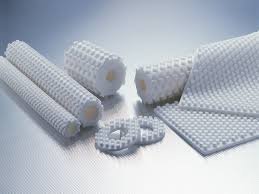
The Nodular Roller, often referred to as a Nodular PVA Roller or Nubby Brush, features raised protrusions on its surface. These Nodular Brush’s tips provide localized mechanical scrubbing action. In the semiconductor industry, the PVA Nodular Brushes are the gold standard for Wafer Brush applications, effectively removing nano-scale particles after polishing.
2. Specialized Surface Topographies
- Nodulated Roller / Dimpled Roller: These provide a “point-contact” cleaning method, which reduces friction while maximizing contaminant trapped in the valleys between nodules.
- Slotted Roller / Spline: These rollers feature channels or a slotted roller design to facilitate high-volume chemical flow and particle flushing.
- Flat PVA Roller: Used primarily for PVA Coating Roller applications or high-speed water absorbing materials processes where uniform surface contact is required.
- Textured Roller: Offers a middle ground between flat and nodular for specific industrial wiping needs.

Critical Applications in High-Tech Industry
Semiconductor Post-CMP Cleaning
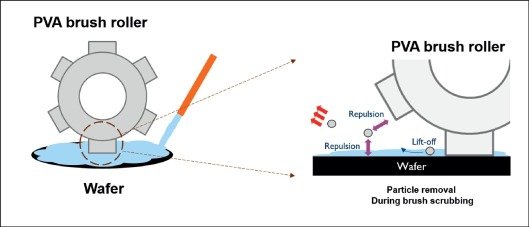
In the wafer fabrication process, the Post-CMP Scrubber Brush is essential. After Chemical Mechanical Planarization (CMP), the wafer is covered in slurry particles. PVA Brush Roller uses DI water flowing through its core to flush out debris. Because of its non-stick roller and anti-adhesive roller properties, the PVA does not redeposit contaminants onto the wafer.
Industrial Drying and Wicking
Beyond cleaning, the PVA Brush Roller is used as an absorbing sponge to remove excess moisture from surfaces. Polyurethane film manufacturers often use these rollers to ensure a streak-free finish. Whether it is a PVA sheet used for manual wiping or a continuous PVA Sponge Roller line, the pva sponge water wash capability ensures that surfaces are left perfectly dry.
PVA vs. Other Materials
While PU sponge (polyurethane) is common in general cleaning, it lacks the extreme hydrophilicity of PVA. A polyvinyl alcohol sponge is superior because it:
- Is lint-free and static-free.
- Has higher tensile strength when wet.
- Possesses a unique sponge to absorb water speed that PU cannot match.
Maintenance and Best Practices
To ensure the longevity of your PVA Brush Roller and PVF Roller (Polyvinyl Formal):
- Pre-soak: Always soak the PVA brush before use. It dries into a hard, rigid state and must be softened to prevent surface damage.
- Cleaning: Use a dedicated pva brush cleaning protocol to remove chemical residues.
- Proper Storage: Keep pva sponges and pva sheets in a moist environment or a sealed container to prevent hardening.
Choosing the Right Roller or Brush
When selecting a PVA Brush Roller, consider:
- Material type: PVA, foam, sponge, or polyurethane.
- Surface texture: Nodular, dimpled, flat, or nubby.
- Application: Coating, cleaning, polishing, or absorbing water.
- Durability: Resistant to wear, anti-adhesive, and long-lasting for industrial use.
Other options like Spline, Slotted Roller, or Flat PVA Roller can complement specific machinery setups.
Conclusion
From the Nodular Roller used in high-end wafer scrubbers to the PVA glue brush used in precision bonding, PVA (Polyvinyl Alcohol) remains the elite choice for liquid management and surface safety. If your process requires a textured roller that excels at absorbing while remaining a non-stick roller, a high-quality PVA Brush Roller is your definitive solution.
For manufacturers looking for water absorbing materials or a reliable Nubbed Roller, understanding the micro-structure of the pva foam is the first step toward a cleaner, more efficient production line.
 German
  English
  French
  Spanish
  Vietnamese
  Russian