
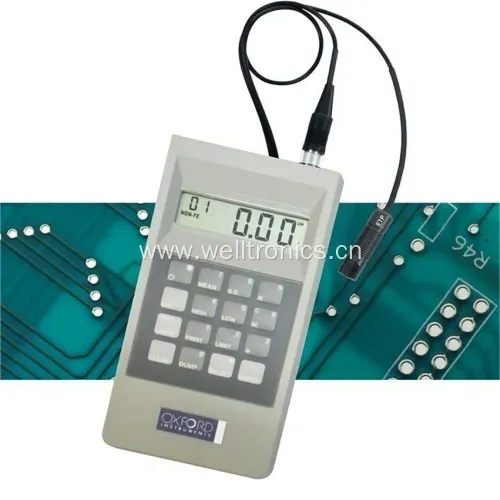
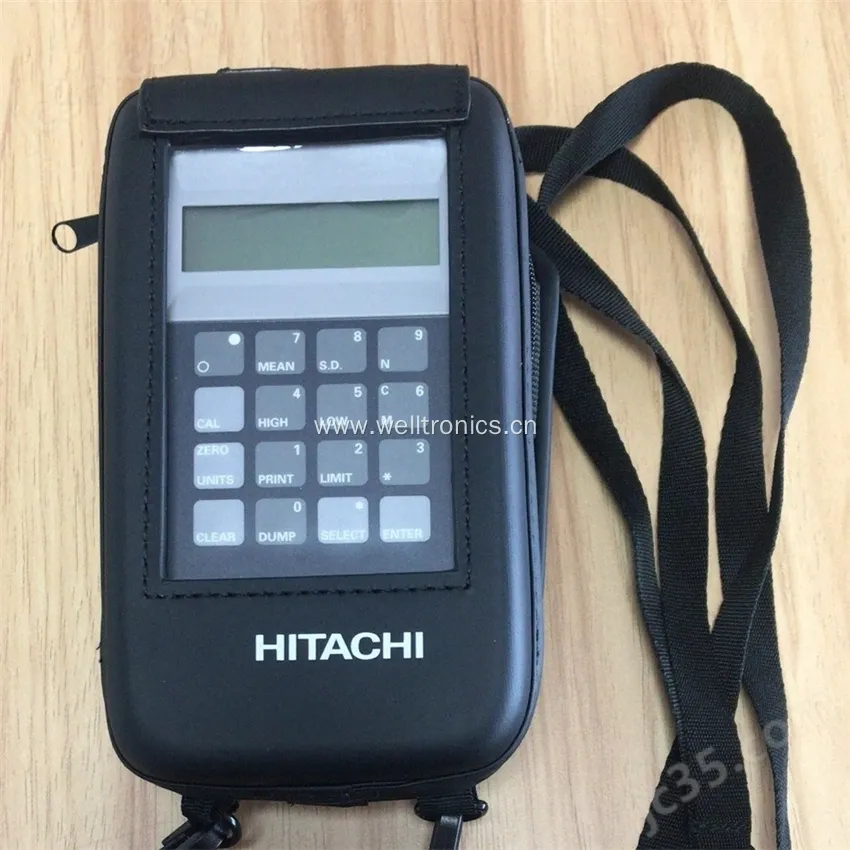
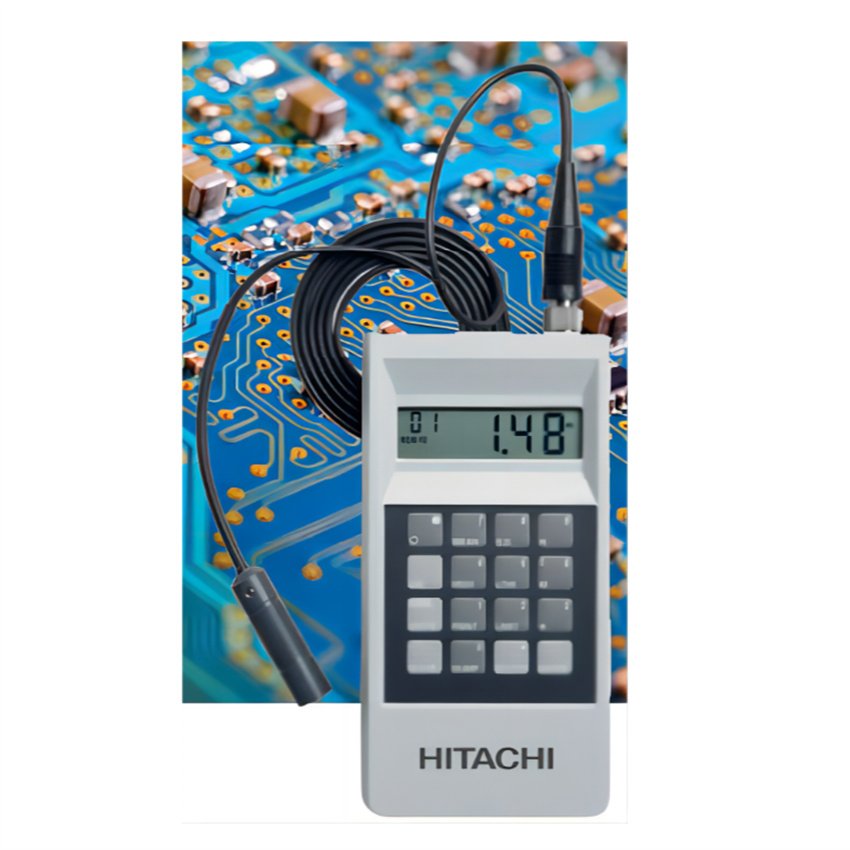
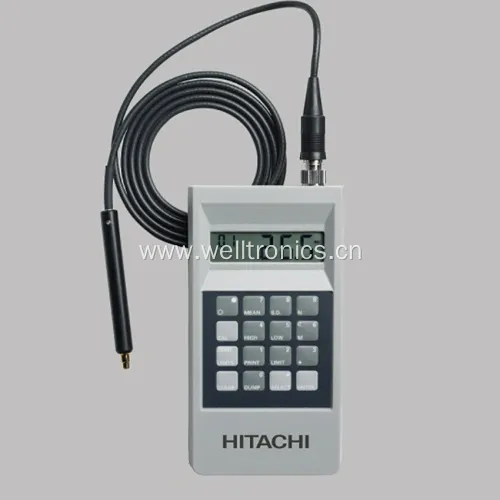
Hitachi CMI500 Thickness Gauges
$4,750.00
Hitachi CMI500 is a highly modular benchtop thickness gauge system that utilizes specialized ETP and SRP-4 probes to provide precise, non-destructive measurements of both surface copper and plated through-hole (PTH) thickness for the PCB quality control industry.
1. Overview of the Hitachi CMI500 System
The Hitachi CMI500 is a multi-functional coating thickness gauge system. Its primary strength lies in its modularity; the base unit can be equipped with different probes depending on the measurement task. Whether you are using the CMI500 ETP Probe for through-holes or the SRP-4 Probe for surface copper, the system provides a unified interface for data collection and analysis.
This digital thickness gauge is engineered to handle the complexities of Non-Destructive Testing (NDT). It allows manufacturers to verify that Circuit Board Plating meets IPC (Institute for Printed Circuits) standards without damaging the expensive finished product. For companies looking to maintain a high-quality reputation, the CMI500 is an essential thickness measurement tool.
2. Core Functionality and Modular Probe Technology
The CMI500 is famous for its “Plug-and-Play” probe architecture. By switching probes, the device toggles between different physical principles, such as Micro-Resistance and Eddy Current.
The ETP (Electromagnetic Through-hole) Probe
For measuring copper thickness inside a hole, the ETP probe for CMI500 is the industry standard. It uses eddy current technology to measure the barrel of the hole without being influenced by the surface copper. This is critical for determining if the PCB hole copper is thick enough to handle the electrical load.
The SRP-4 (Surface Resistivity) Probe
When the task shifts to Surface Copper Thickness, the system utilizes the SRP-4 measurement probe. This probe uses a Four-Point Probe micro-resistance method, ensuring that the thickness reading is substrate-independent. It doesn’t matter if there is copper on the other side of the board; the SRP-4 only measures what is directly beneath the pins.
3. Industrial Applications in Electronics Manufacturing
The CMI500 serves as a critical thickness tool across various stages of the fabrication process.
Plating Through-Hole (PTH) Inspection
The most common application is Plating Thickness Testing in through-holes. If the copper in the hole is too thin, it can lead to “knee cracks” or open circuits during soldering. The CMI500 provides the High Precision Thickness data needed to approve or reject a batch before it moves to final assembly.
Surface Finishing and Solder Measurement
Beyond copper, the CMI500 can be used for Solder Thickness Measurement and checking other surface finishes. In the Surface Finishing Industry, ensuring that the unit of thickness for gold or tin plating is correct is essential for both cost control and functional reliability.
Multi-Layer Board Analysis
For Multi-Layer Coating boards, the CMI500 can measure the thickness of individual layers during the build-up process. This ensures that the core thickness and the overall standard pcb thickness remain within the design window of 1.6mm or other custom specifications.
4. Technical Characteristics and Data Precision
Reliability in a digital thickness gauge comes down to the quality of the data and the ease of Probe Calibration.
Resolution: The CMI500 provides high-resolution readings down to 0.01 mils (0.25 $\mu m$).
Statistics: The gauge meter digital interface automatically calculates the mean, standard deviation, and range for a series of measurements. This is vital for Quality Control (QC) audits.
Measurement Units: The device supports a variety of thickness measurement units, allowing users to switch between mils, microns ($\mu m$), and millimeters.
Calibration Standards: The system relies on CMI500 Calibration Standards—certified foils and plates that are NIST-traceable. Regular use of these standards ensures the thickness measurement instrument remains accurate over years of use.
5. Maintenance, Repair, and Troubleshooting
Because the CMI500 is an industrial-grade thickness gauge meter, it is built to last, but it does require regular maintenance.
Troubleshooting the ETP Probe
The ETP probe is a mechanical sensor that enters the hole. Over time, the tip can become contaminated with solder mask or debris. The CMI500 ETP operation manual provides detailed instructions on how to clean the tip and when to seek CMI500 Probe repair. If the ferrite tip is cracked, a Replacement ETP probe is usually necessary.
Hitachi Probe Maintenance
For the surface probes like the SRP-4, the four pins must remain sharp and clean. If the pins become recessed or bent, the micro-resistance reading will fluctuate. In these cases, contacting an authorized Oxford ETP probe supplier or Hitachi service center is the best path for OEM ETP probe replacement or repair.
6. Sourcing and Market Value
When evaluating the CMI500 ETP Probe price, it is important to consider the long-term ROI. While a Used CMI500 Gauge might be available at a lower cost, a new unit comes with the latest software and factory-certified Calibration Standard sets.
Wholesale and Bulk: For large factories, an ETP probe wholesale or bulk purchase agreement can significantly lower the cost of consumables.
Supplier Selection: Always ensure you are working with a legitimate CMI500 probe manufacturer representative to guarantee you are receiving OEM ETP probe for PCB inspection parts.
Compatibility: The CMI500 probes are often compatible with the CMI700 and CMI760 series, making them a versatile investment for a growing lab.





 German
  English
  French
  Spanish
  Vietnamese
  Russian