
1.Defining SMT
Surface Mount Technology (SMT) is the modern method for assembling electronics, placing tiny components (SMDs) directly onto the surface of a Printed Circuit Board (PCB) instead of through holes,Unlike traditional through-hole technology, SMT enables smaller components, higher circuit density, and fully automated assembly—making it the backbone of today’s electronics industry.
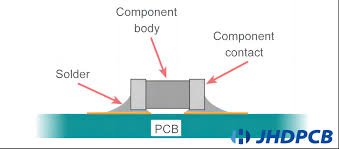
SMT component is usually smaller than its through-hole counterpart because it has either smaller leads or no leads at all. It may have short pins or leads of various styles, flat contacts, a matrix of solder balls (BGAs), or terminations on the body of the component.
Common abbreviations
| Term | Full Name | Definition | Focus |
| SMT | Surface Mount Technology | The process or method of mounting components. | Process/Assembly |
| SMD | Surface Mount Device | The component or package itself. | Component/Part |
2. The SMT Assembly Process
The high-speed, automated nature of the surface mount technology process is what drives its efficiency. A typical SMT line (smt assembly) follows these steps:
- Solder Paste Printing: A stencil printer applies a precise amount of solder paste onto the component pads of the smt pcb design.
- Component Placement: The surface mount machine or Pick-and-Place machine, automatically and rapidly picks up SMD components and places them accurately onto the solder paste-covered pads. This is the heart of smt manufacturing.
- Reflow Soldering: The entire smt board is passed through a reflow oven, which melts the solder paste (smt soldering) and allows it to cool, forming permanent, strong electrical and mechanical bonds (soldering surface mount technology).
- Inspection and Testing: Automated Optical Inspection (AOI) verifies the component placement and solder joint quality.
3. Advantages of SMT Technology
The shift from through-hole to surface mounting technology brought enormous advantages to the Electric Outboard Guides:
| Advantage | Description |
| High Density & Miniaturization | SMT components are much smaller, and they are placed closer together on both sides of the board. This results in far higher component density, leading to smaller, lighter products. |
| Cost-Effectiveness | SMT equipment (surface mount technology machine) allows for high-speed, fully automated assembly, significantly reducing labor costs and cycle times. |
| Improved Performance | Shorter leads on SMD packages reduce parasitic inductance and capacitance, leading to better high-frequency performance (smt electronics). |
| Better Mechanical Strength | SMT allows for more reliable performance under vibration and shock. |
4. Key Aspects and Terminology in SMT
- SMD Package Types: Includes resistors, capacitors (common surface mount sizes like 0402, 0603), QFP (Quad Flat Package), BGA (Ball Grid Array), etc.
- SMT Equipment: Encompasses stencil printers, Pick-and-Place machines, and reflow ovens. The entire system is often referred to as an SMT system.
- SMT PCB: A surface mount technology PCB is designed with solder pads on the surface, optimized for the smt process.
- Surface Mount Soldering: Refers specifically to the process of melting the solder paste in the reflow oven to join the component to the pad.
- Through-Hole vs. SMT: Surface mount technology vs through hole is the fundamental difference in assembly. THT components pass leads through the board; SMT components are placed on the surface,custom mold base.
In conclusion, surface mount technology assembly is the dominant method for producing nearly all modern consumer electronics.Its ability to create compact, high-performance circuits efficiently is why SMT and SMD are the fundamental terms in contemporary electronics manufacturing SMT.
 German
  English
  French
  Spanish
  Vietnamese
  Russian