
Sponge Roller Overview
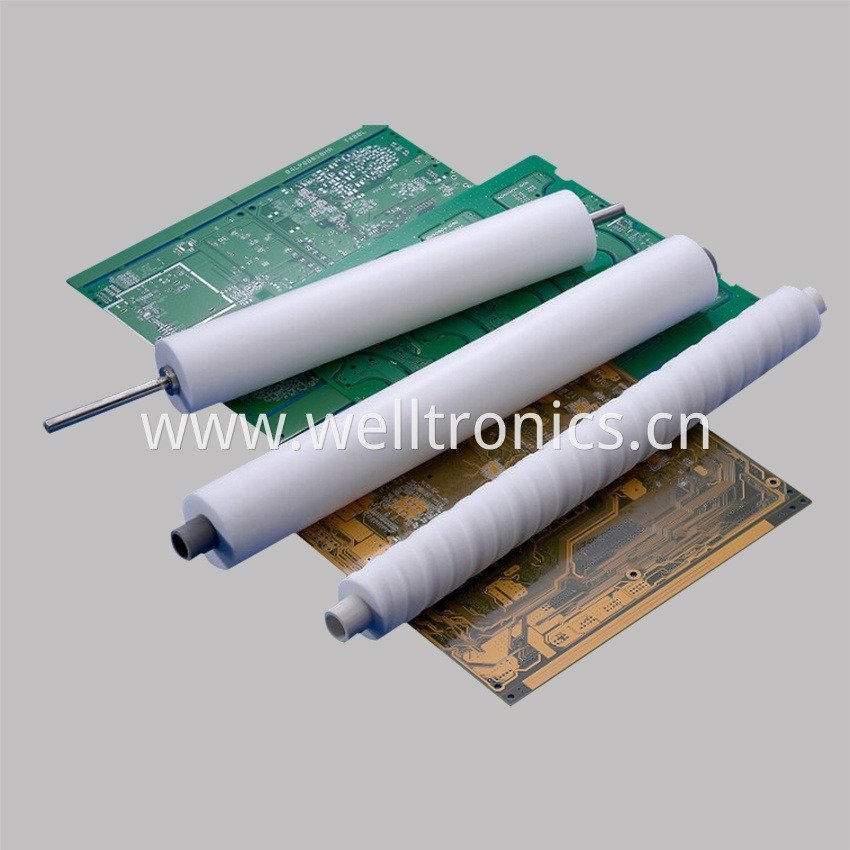
Sponge rollers are porous contact rollers used to absorb or transfer liquid in compatible PCB processing equipment. In horizontal wet-processing lines, their role must be defined by the installation: removing rinse water, controlling liquid carryover, or performing another validated contact operation.
Sponge Roller Material Comparison
The performance of the sponge rollers is primarily defined by the material and porosity of the foam:
| Comparison Factor | PVA Sponge Roller | PVC Sponge Roller | PU Sponge Roller | PP Sponge Roller |
|---|---|---|---|---|
| Material identification | Commercially described as PVA sponge; confirm the exact formulation and grade. | Confirm that PVC identifies the sponge layer, not just the supporting tube. | Polyurethane sponge; properties depend on formulation and pore structure. | Confirm whether the working layer is polypropylene foam, porous fiber, or another construction. |
| Water absorption | Used for PCB rinse-water removal; performance depends on grade, conditioning, and drainage. | absorbing must be verified from the actual pore structure and wettability. | absorbing depends on the selected foam grade and wettability. | Water uptake depends on construction and any wetting treatment. |
| Dry-state behavior | Some grades become firm when dry and require conditioning before use. | Dry-state flexibility and recovery require grade-specific confirmation. | Some grades remain flexible when dry; confirm the supplied product. | Depends on construction and grade. |
| Elasticity and recovery | Evaluate in the specified wet or conditioned state. | Verify compression recovery and permanent deformation. | Verify flexibility and recovery under operating conditions. | Verify compressibility and recovery for the actual structure. |
| Chemical resistance | Confirm compatibility with the actual chemical, concentration, temperature, and exposure time. | Do not assume universal acid, alkali, or solvent resistance. | Resistance varies by formulation; verify the actual process conditions. | Base-polymer resistance alone does not establish compatibility of the complete roller. |
| Temperature limits | Use the limits specified for the complete assembly. | Use the limits specified for the complete assembly. | Use the limits specified for the complete assembly. | Use the limits specified for the complete assembly. |
| PCB application assessment | A candidate for absorption and water removal after rinsing. | Evaluate only after confirming material identity and liquid-handling performance. | Evaluate for water removal where the documented properties match the process. | Evaluate only after confirming construction, wettability, and operating performance. |
| Main purchasing check | Conditioning requirements, wet dimensions, and absorption–drainage performance. | Working-layer material versus core material; open- or closed-cell structure. | Foam grade, chemical compatibility, and compression recovery. | Actual porous construction, wetting behavior, and validated application. |
Where Sponge Rollers Fit in a Horizontal PCB Line
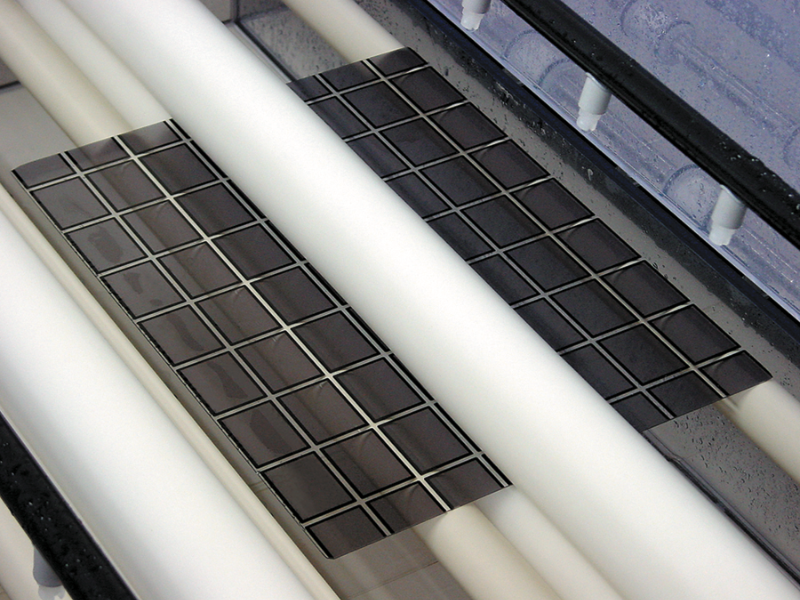
Horizontal wet-processing equipment transports panels through designated treatment and rinsing stages. Depending on the machine design, sponge rollers may be installed in a water-removal section before downstream drying.
PVA roller sponge manufacturers identify water removal after PCB washing as an established application,Start by identifying the exact station and its task.
| Station or task | Intended purpose | What must be confirmed |
|---|---|---|
| After a rinse stage | Reduce liquid remaining on the panel | Roller suitability, drainage arrangement, and acceptable residual water |
| Before a drying stage | Reduce the liquid load entering the dryer | Performance under the actual panel and line conditions |
| Between process stages | Control liquid carryover where the equipment is designed for this function | Chemical compatibility and validated carryover performance |
| Contact-cleaning station | Remove specified contamination | Whether the roller is designed and qualified for cleaning |
How to Specify a PVA Brush Roller or Sponge Roller
A replacement roller needs to fit mechanically and operate correctly in its conditioned state.
Provide an approved drawing wherever possible. Measuring a worn roller alone can reproduce wear or deformation instead of the intended dimensions.
The specification should identify:
- Working outside diameter.
- Bore or inside diameter.
- Effective sponge length and overall assembly length.
- Core, shaft, and end-interface details.
- Required dimensional tolerances.
- The dry, wet, or conditioned state used for inspection.
If conditioning changes the dimensions of the selected grade, agree on a reproducible inspection condition with the supplier.
Troubleshooting Uneven Water Removal and Roller Marks
When performance changes, record the symptoms before adjusting the machine. Note whether the problem affects the full width, one side, particular panel features, or only startup production.
| Observed problem | Initial checks | Useful follow-up |
|---|---|---|
| Water remains across most of the panel | Roller condition, preparation, contact setup, and liquid release | Compare the current setup with the approved baseline |
| One side remains wetter | Alignment, panel support, roller condition, and drainage distribution | Map the wet area against the machine’s working width |
| Repeating lines or marks appear | Roller surface, trapped debris, and other contacting components | Record the pattern and investigate potential sources |
| Performance changes after a stoppage | Restart conditioning and equipment state | Compare restart and normal-running records |
| New contamination appears | Incoming panels, liquid, roller, and handling | Use appropriate controls to identify the source |
| A new roller performs differently | Material grade, dimensions, conditioning, and setup | Compare specifications before changing operating settings |
Practical Maintenance Routine for Long Service Life
- Inspect before startup. Check for tears, embedded debris, deformation, and loose mounting. Confirm that liquid supply and drainage paths are clear.
- Condition the roller correctly. Follow the supplier’s preparation instructions for the specific material grade. Do not assume a universal soaking time or temperature.
- Monitor operating performance. Watch for excess residual water, uneven removal, and new surface marks. Record changes after shutdowns, maintenance, or process adjustments.
- Isolate equipment before cleaning. Follow the machine’s energy-isolation procedure. Never touch or clean rotating rollers.
- Use approved cleaning methods. Confirm compatibility with the sponge, core, and bonding materials. Avoid scraping, aggressive brushing, and unapproved solvents.
- Follow material-specific storage instructions. Confirm whether the roller requires wet or dry storage. Relieve sustained compression where specified by the equipment instructions.
- Verify results after restarting. Complete the required reconditioning and run representative test panels. Check water removal and surface condition before production release.
- Replace damaged or ineffective rollers. Quarantine rollers with tears, persistent contamination, unacceptable deformation, or performance that does not recover after approved maintenance.
- Keep maintenance records. Track installation dates, operating conditions, cleaning, inspection findings, and replacement reasons. Use these records to establish maintenance intervals.
FAQ
Is a PVA brush roller the same as a sponge roller?
The terms can overlap in supplier listings. Specify whether the working surface is flat or nodular and whether the task is liquid removal, wiping, or scrubbing.
Will an absorbent roller become saturated?
Evaluate the installed absorption, compression, and drainage arrangement. Continuous performance depends on liquid handling during operation, not simply the capacity of a stationary sponge.
Is there a universal soaking time?
No universal time is established by the reviewed sources. Use the selected supplier’s procedure and completion criterion for the actual grade, dimensions, and supplied condition.
How often should sponge rollers be replaced?
Use condition, process results, and operating history. Establish inspection intervals and replacement triggers from the qualified application rather than copying a service-life claim from another product.
 German
 English
 French
 Spanish
 Vietnamese
 Russian