
V-Cut Thickness Machines Overview
V-Cut Thickness Machines (also known as a V-Cut Remaining Thickness Tester),is specialized equipment in electronics manufacturing, primarily V-Cut Depaneling Machines that separate PCBs with V-grooves, and V-Cut Residual Thickness Testers that measure the precision of those cuts, ensuring the remaining material is consistent to prevent stress and damage during board separation.
Types and Functions of V-CUT Testers
Depending on the production volume and precision requirements, there are several versions of the v cut Thickness Machines used for testing:
- Manual PCB V-Cut Depth Gauge: A handheld or desktop Gauge used by technicians for spot-checking. It usually features a precision probe that sits in the groove to provide a Thickness Measurement.
- Automatic V-CUT Thickness Machines : These systems are often integrated near an automatic pcb v-cut machine. They provide rapid, high-precision readings using digital sensors to ensure every pcb v cut specification is met.
- Non-Contact Laser Testers: The most advanced PCB V-Groove Tester type, using lasers to measure Depth Measurement without touching the delicate copper surface, preventing any physical damage to the v cut pcb.
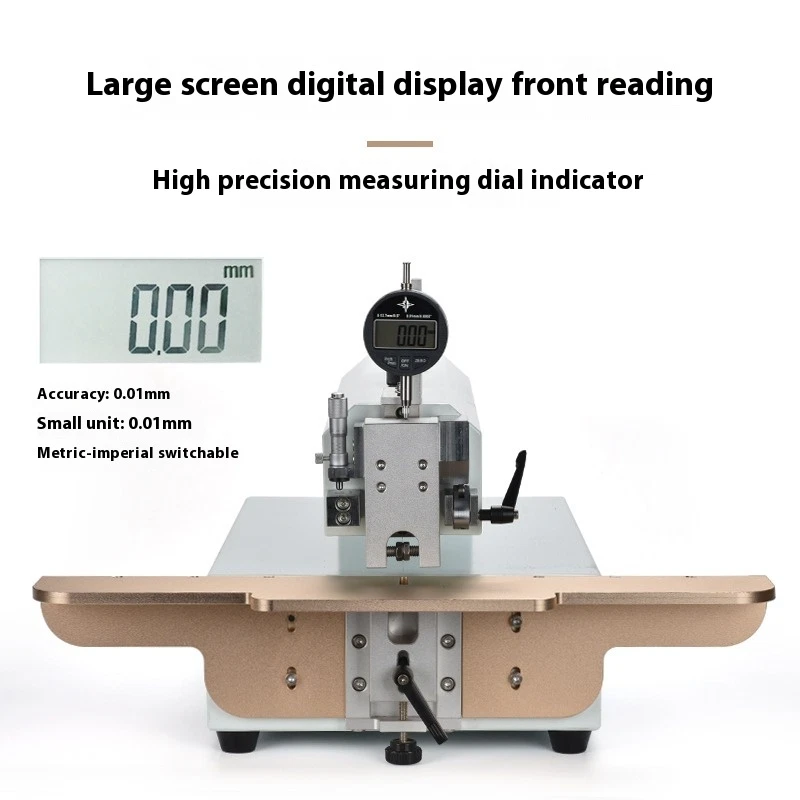
Key Concepts: Remaining Thickness vs. Cut Depth
Understanding a v cut pcb design requires mastering two primary metrics measured by a V-Cut Thickness Gauge for PCB:
- Remaining Thickness (The Web): This is the core material left between the two V-grooves. It is the most vital V-CUT Thickness Machines metric for structural stability.
- V-Cut Offset: This refers to how well the top and bottom grooves align. If the v cut machine pcb is misaligned, the board will not snap cleanly.
- V-Angle: Most v cut pcb machine blades are set at 30℃ or 45℃. The Tester ensures the blade hasn’t worn down, which would change the groove shape.
Why Use a V-CUT Thickness Tester?
Using V-CUT Thickness Machines in PCB manufacturing provides several advantages:
- Quality Assurance – Maintaining accurate V-CUT depth ensures that PCBs can be safely depaneled without causing cracks or electrical failures.
- Process Efficiency – Automatic PCB V-Cut Machines streamline the production process by reducing manual inspection time.
- Design Compliance – Ensures that V-cut PCB design parameters and PCB V-Cut specifications are consistently met, preventing costly rework.
- Damage Prevention – Prevents overcutting, which could lead to board breakage, and undercutting, which complicates depaneling.
- Versatility – Suitable for single-layer, double-layer, or multi-layer PCB production, making them indispensable for modern electronics manufacturing.
How do I split V-CUT PCB boards?
One of the most common questions from assembly technicians is: “How do I split v cut pcb boards without damaging them?” The answer depends heavily on the accuracy of the initial cut. If the V-CUT Thickness was measured correctly during production, the boards can be split using:
- Manual Breaking: Hand-snapping is possible for simple designs with no sensitive components near the edge.
- V-Cut PCB Depaneling Machine: Also known as a “Pizza Cutter” depaneler, this machine uses a circular blade to follow the groove and separate the boards with zero mechanical stress on the components.
If the V-CUT Remaining Thickness Machines indicates the web is too thick, manual splitting should be avoided, as it will cause the fiberglass to tear unevenly, potentially ruining the circuit.
V-CUT Thickness Machines Specifications
| Metric | Typical Specification | Tools Used |
| Total Board Thickness | 1.6mm (Standard) | Standard Thickness Gauge |
| Remaining Thickness | 0.4mm ± 0.05mm | V-Cut Remaining Thickness Tester |
| V-Groove Depth | 1/3 of board thickness per side | Depth Measurement Gauge |
| Alignment Offset | < 0.05mm | V-CUT Thickness Tester (Optical) |
Conclusion
From the initial v cut pcb design to the final v cut test, precision is the difference between a high-yield production run and a bin full of scrap. By utilizing a high-quality V-CUT Thickness Tester Machine, manufacturers can guarantee that their boards are easy to split, structurally sound, and built to last.
 German
  English
  French
  Spanish
  Vietnamese
  Russian