
PCB Router Bit
$0.5 – $1 / Pieces
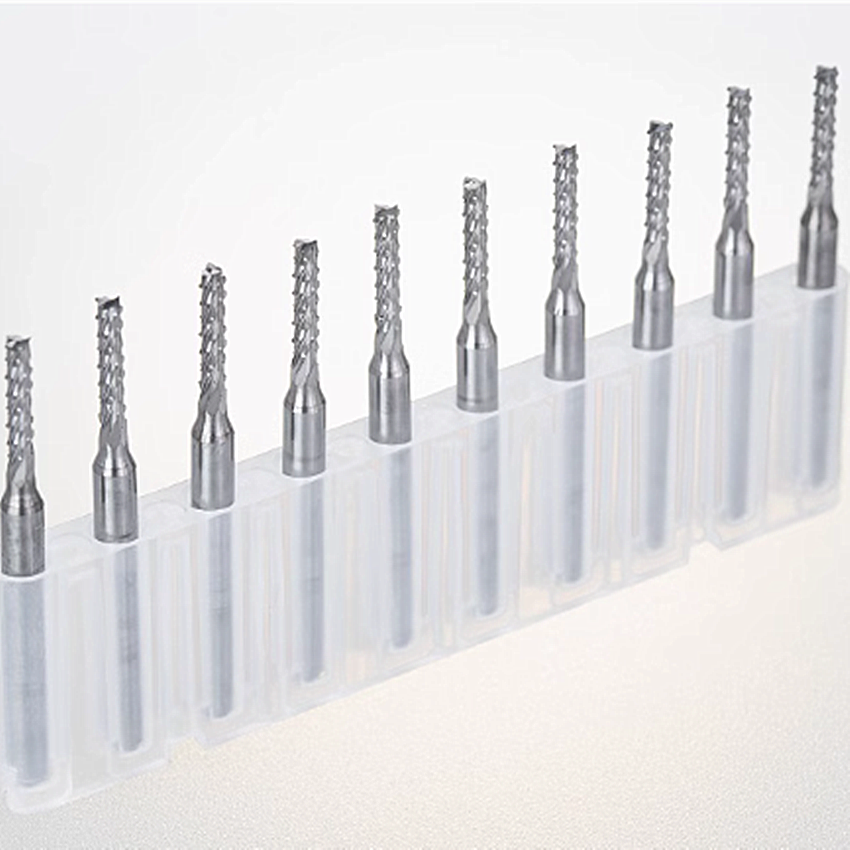
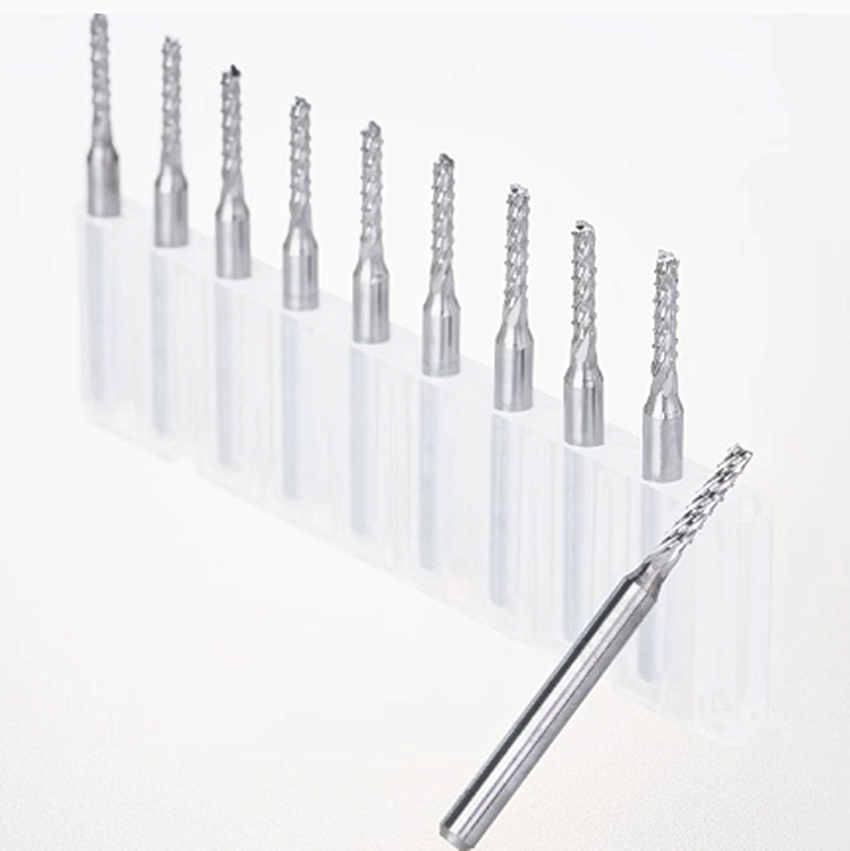
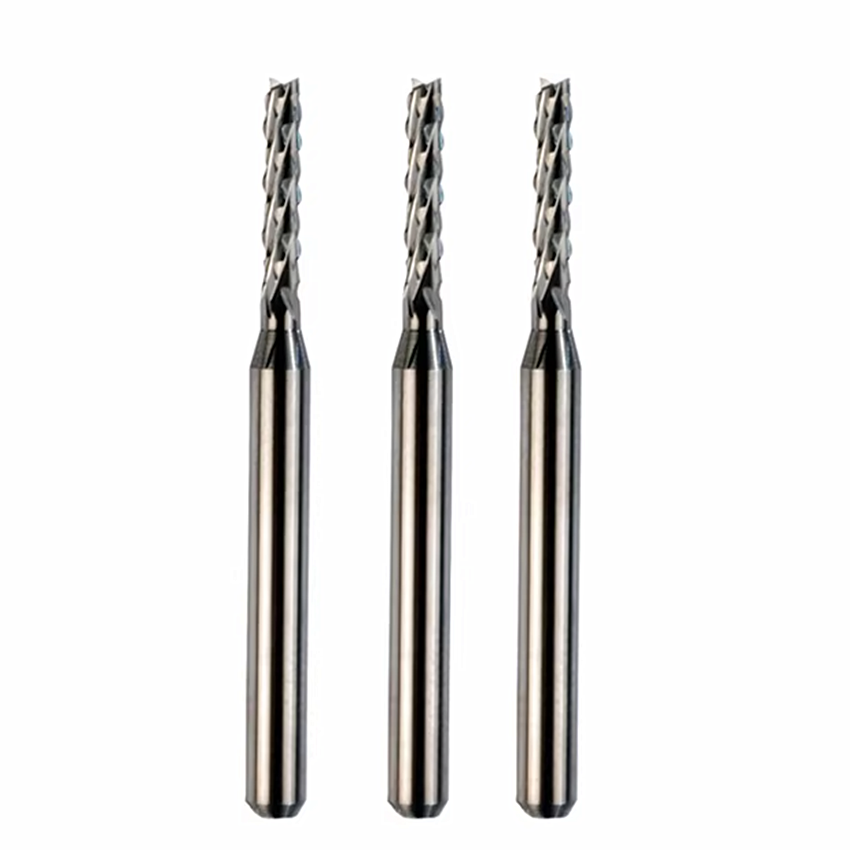
PCB Router Bit is a precision cutting tool used in PCB manufacturing to accurately route, profile, and separate printed circuit boards with clean edges and minimal burrs.
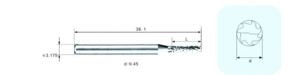
Material:Tungsten carbide
Shank Diameter :3.175mm
Over Length:38.1mm±0.1mm
1. CB Router Bit Overview
Router Bit is the final arbiter of a PCB’s physical dimensions. Unlike V-scoring, which creates a straight-line break, routing allows for curved edges, internal cutouts, and complex tabs. A router bit set specifically designed for electronics must be capable of high-speed rotation—often exceeding 30,000 RPM—to ensure that the glass fibers within the FR-4 substrate are sheared cleanly rather than pulled or torn.
In industrial settings, a bit router set is typically managed by automated tool changers. These systems rely on the consistent dimensions of 1 4 router bits or 1/8-inch (3.175mm) shanks to ensure that every board in a batch is identical. The precision provided by these tools is what allows modern smartphones and medical devices to fit high-density electronics into increasingly compact enclosures.
2. Material Technology and Tool Geometry
The performance of carbide router bits is a direct result of their metallurgical composition. Standard high-speed steel (HSS) is insufficient for PCB work because the glass fibers in the board act as a powerful abrasive that would dull a steel edge in minutes.
The Carbide Advantage
Industrial-grade router bits are manufactured from sub-micron grain tungsten carbide. This material provides an exceptional balance of hardness and transverse rupture strength. By using carbide router bits, manufacturers can maintain sharp cutting edges for longer durations, which is essential for maintaining the “dimensional stability” of the PCB.
Specialized Geometries
The geometry of a router bit determines how it removes material and clears chips:
Diamond-Cut (Cross-Cut): These bits feature multiple cutting edges that grind material into a fine powder. This is the standard for FR-4 because it minimizes the upward or downward force on the board.
Fish-Tail Tip: Many router drill bits feature a fish-tail end, which allows the bit to plunge directly into the material without wandering, ensuring that internal slots are accurately positioned.
Specific Profiles: For specialized edge work, a chamfer router bit or a 45 degree angle router bit is used to bevel the edges of a board, which is a common requirement for gold finger connectors to ensure smooth insertion into backplane slots.
3. Key Features of Professional Routing Tools
When selecting a set router bits for your facility, several features distinguish professional-grade tools from generic alternatives:
Precision Shanks and Balance
High-quality cnc router bits are ground to extremely tight tolerances. This minimizes “runout”—the slight wobbling of the bit as it spins. Even a few microns of runout can lead to snapped bits, especially when using micro-routers with diameters below 1.0mm.
Heat Management
Routing generates significant friction. Advanced carbide router bits are often coated with AlTiN (Aluminum Titanium Nitride) to increase thermal resistance, allowing the tool to run at higher speeds without “smearing” the epoxy resin of the circuit board.
Versatility in Profiles
A comprehensive bit router set often includes more than just straight cutters. For instance:
A rabbet router bit (or router rabbet bit) is used to create a stepped edge, often required when a PCB must be recessed into a custom plastic or metal housing.
A surfacing router bit is used to level the sacrificial “spoiler board” on the CNC bed, ensuring that the PCB remains perfectly flat during the entire cutting cycle.
4. Applications in Electronics and Beyond
The application of router bits extends across the entire Electronics Manufacturing spectrum:
Standard Depaneling: Removing individual PCBs from a larger production panel.
Edge Beveling: Using a chamfer router bit to prepare boards for high-speed data connectors.
Internal Cutouts: Creating windows for displays or holes for specialized mounting hardware using router drill bits.
Prototyping: Allowing engineers to quickly iterate on board shapes for wearable technology.
Beyond traditional PCBs, these tools are frequently used in the processing of other abrasive composites, such as carbon fiber and G10 laminates, where the same principles of high-speed carbide cutting apply.
5. Maintenance and Storage
Because carbide is a brittle material, it is prone to chipping if handled poorly. This makes router bit storage a critical part of the quality control process.
Proper Handling
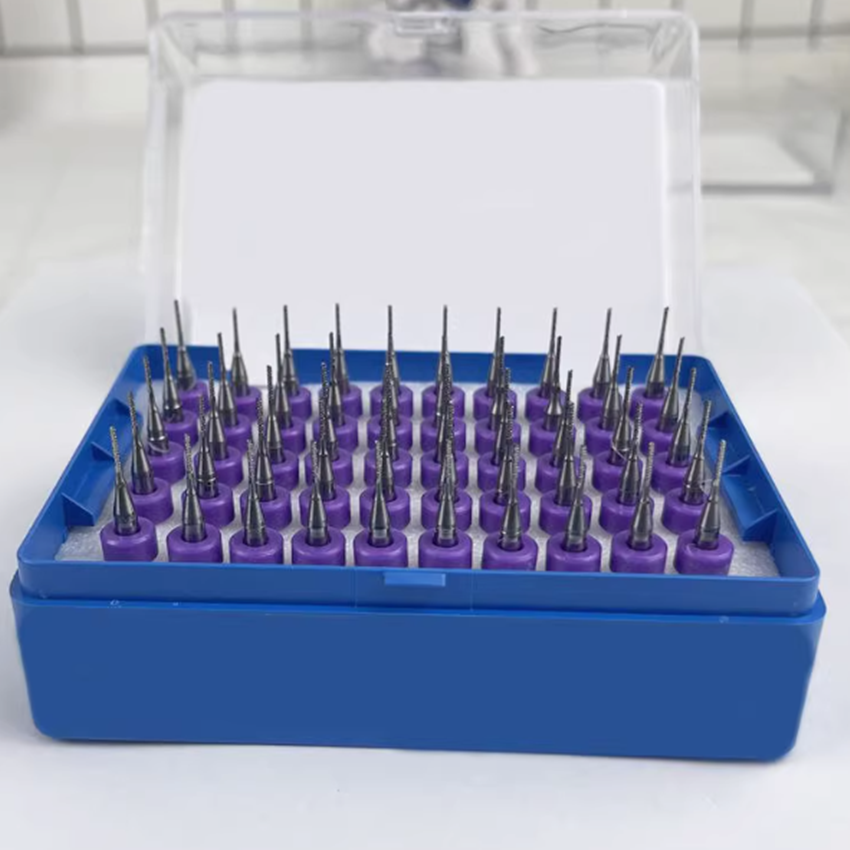
Avoid letting router bits knock against one another. Even a microscopic chip on the cutting edge can lead to burrs on the PCB edge. A dedicated router bit storage system—such as a CNC tool rack with individual plastic sleeves—is the best way to protect your investment.
Cleaning and Inspection
Over time, epoxy resin can build up in the flutes of the bit. Regular cleaning with specialized solvents ensures that the bit continues to clear chips effectively. Before a bit is returned to its router bit set container, it should be inspected under a microscope for wear. Once the cutting edge rounds over, the mechanical stress on the PCB increases, potentially leading to delamination.
6.Packaging & Delivery
| Selling Units | Piece/Pieces |
| Package Type | 50pcs/box,40box/carton |


 Vietnamese
  English
  German
  French
  Spanish
  Russian