
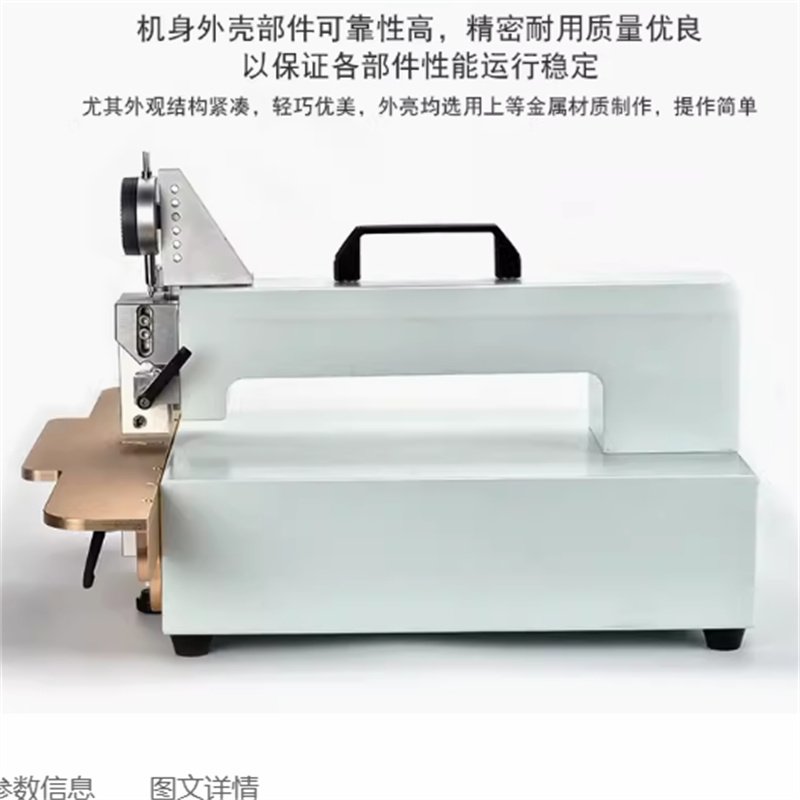
V-CUT Thickness Tester Machine
$650.00
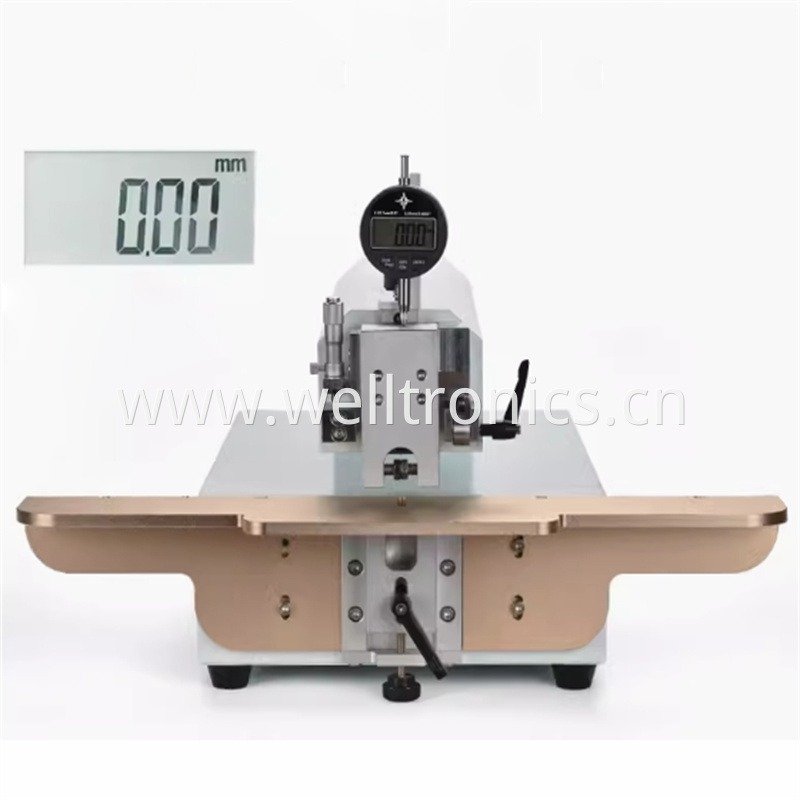
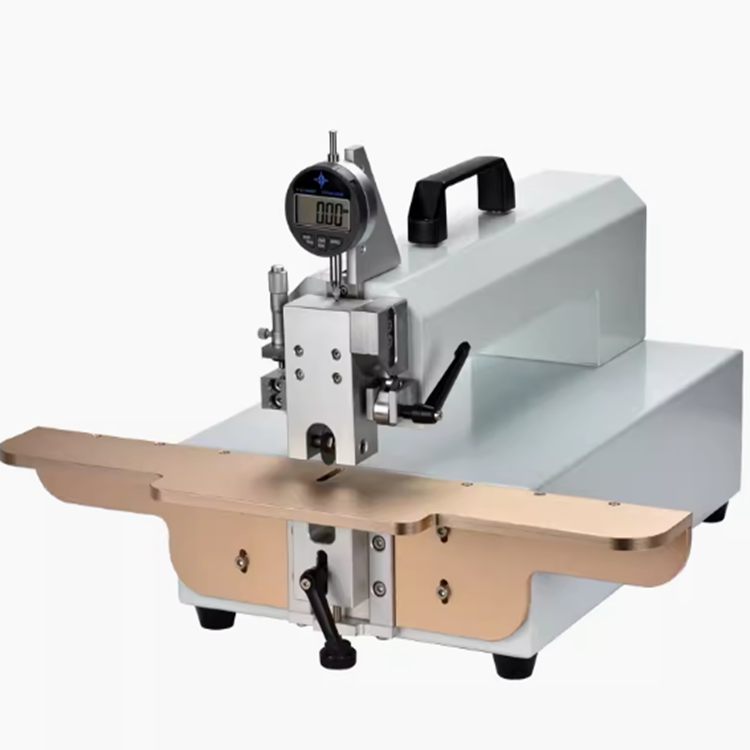
V-CUT Thickness Tester Machine is a specialized measuring instrument used to precisely gauge the residual thickness of the PCB material remaining at the bottom of the V-groove (V-score) after the scoring process, ensuring the board meets depanelization safety and mechanical tolerance specifications.
1.V-CUT Thickness Tester Machine Overview
V-CUT Thickness Tester Machine is a precision instrument specially used to measure the V CUT thickness and residual thickness of PCB (printed circuit board) after being cut by a V CUT machine. In the fields of PCB manufacturing, PCBA (printed circuit board assembly) and SMT (surface mount technology), it plays a vital role and is a key tool to ensure product quality and production process stability.
2 .Feature of V-CUT Thickness Tester :
1.Easy operation, convenient for using.
2.Equipped with high precision digital gauge, SD brand or Mitutoyo brand can choose.
3. The digital gauge precision: SD gauge 0.02mm, Mitutoyo gauge 0.01mm
4. Testing thickness range: 0-8mm
5. Effectively extend length: 415mm
6. Throat depth: 300mm
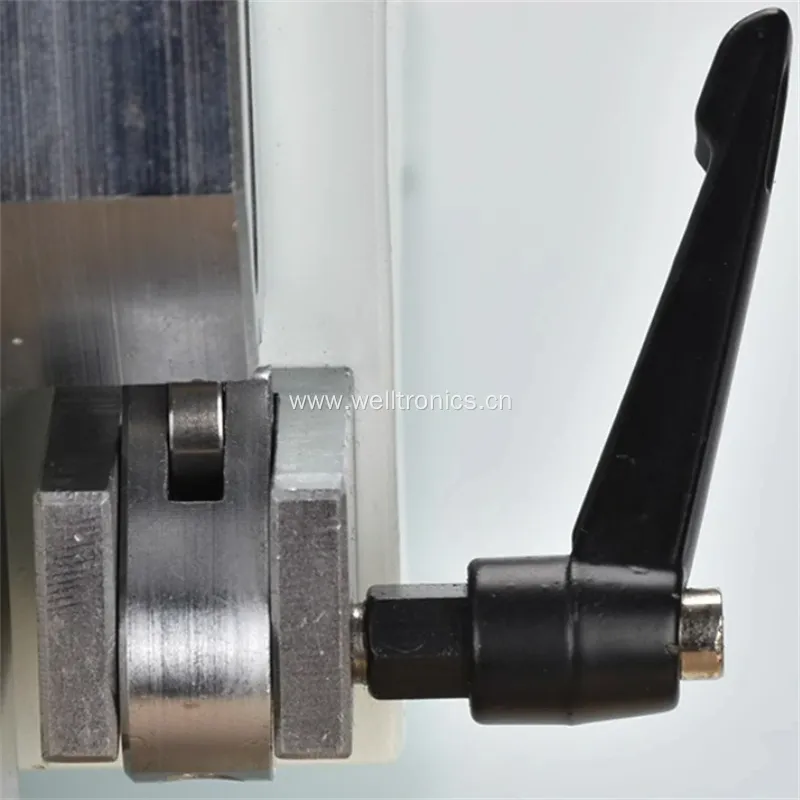
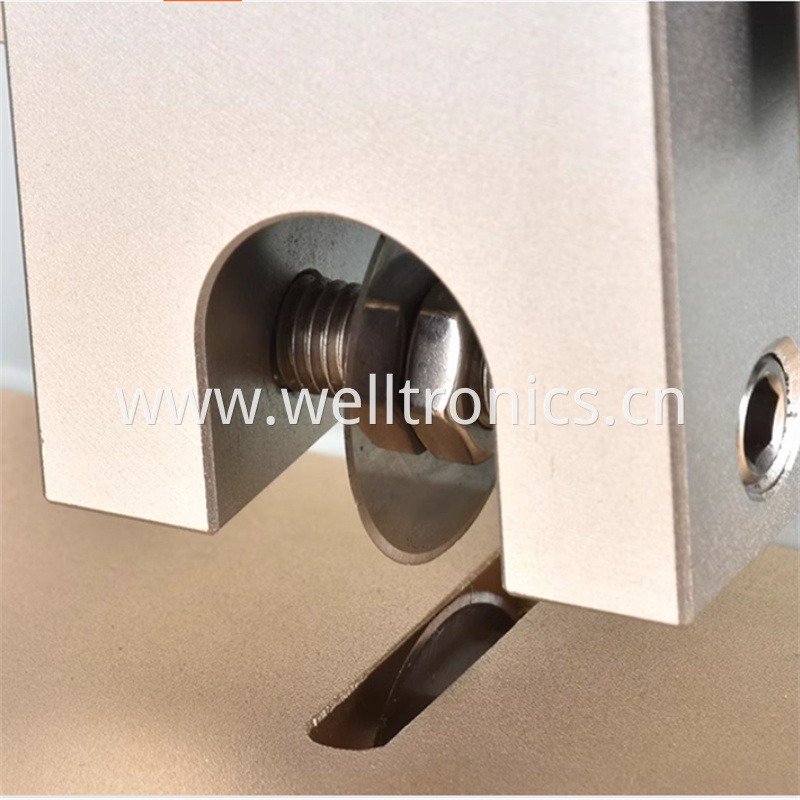
7. Equipped with Long life of superhard steel round head
8. Inch/mm can be changed by the button
9. Can test Panel thickness and calculate V-cut residual
10. Machine size and weight: 500*410*330mm, 15kg
About Packing : V-CUT tester is packed by wooden case.
High-precision measurement: The general accuracy can reach ±0.001mm, which can meet the high-precision requirements of the PCB industry for V CUT thickness measurement. For example, in some electronic devices that require extremely high product dimensional accuracy, a small V CUT thickness deviation may cause product performance degradation or failure.
Fast measurement: The measurement speed is fast, and a measurement can usually be completed within a few seconds. This helps to improve production efficiency and reduce detection time.
Easy operation: The instrument operation interface is simple and easy to understand, and operators can use it without complex training. At the same time, the instrument has automatic calibration and data processing functions, which can quickly and accurately give measurement results.
Multiple measurement modes: supports single-point measurement, multi-point measurement and continuous measurement, which can be selected according to different measurement needs.
3.V-CUT Thickness Tester Application
PCB manufacturing field
In the PCB production process, the V-cut process is a common way to separate boards. The V CUT residual thickness tester is used to detect whether the thickness after V-cut meets the design requirements. For example, for multi-layer PCBs, the V-cut residual thickness between different layers needs to be precisely controlled to ensure subsequent assembly and use performance. Through this tester, manufacturers can promptly discover problems in the V-cut process, such as tool wear, unreasonable cutting parameters, etc., and make adjustments to improve the product yield.
PCBA field
In PCBA production, the quality of the V-groove of the incoming PCB directly affects the subsequent assembly process. Using the V CUT residual thickness tester to detect the V-groove of the incoming PCB can ensure that the thickness and residual thickness of the V-groove meet the assembly requirements. If the V-groove is too thick or too thin, it may cause problems such as board breakage and difficulty in component installation during assembly, affecting product quality and production efficiency.
SMT factory
SMT factories have high requirements for the quality of PCB V-groove, because the quality of V-groove will affect the welding quality of surface mount components and the reliability of products. V CUT residual thickness tester can help SMT factories to conduct strict quality inspections on incoming PCBs, screen out unqualified products, and avoid welding defects and product failures caused by V-groove problems.

FAQ
Q: How to ensure the accuracy of V CUT thickness measurement?
A: To ensure the accuracy of V CUT thickness measurement, you can start from the following aspects:
Instrument selection and calibration: Select a measuring instrument with high precision and good stability, and calibrate it regularly according to the instrument manual. For example, for PCB production with high precision requirements, you can choose an instrument with an accuracy of ±0.001mm, and perform professional calibration every six months or one year.
PCB processing: Before measurement, clean the PCB to remove burrs, residues and other impurities on the edge of the V CUT to ensure that the surface is flat and smooth. Special cleaning tools and detergents can be used to avoid damage to the PCB.
Environmental control: Control the measurement environment within a suitable temperature and humidity range. Generally speaking, it is more appropriate to control the temperature at 20-25℃ and the humidity at 40%-60%. Equipment such as air conditioners, humidifiers or dehumidifiers can be used to adjust environmental parameters.
Operation specifications: Operators must undergo professional training and master the correct measurement techniques. When measuring, make sure that the probe is in vertical contact with the PCB, the applied pressure is uniform and stable, and select a suitable measurement position. Generally, the center of the V CUT should be selected for measurement. At the same time, multiple measurements should be taken to get the average value to reduce the measurement error.
Q: What are the requirements for V CUT thickness measurement in different application scenarios?
A: Different application scenarios have different requirements for V CUT thickness measurement:
PCB manufacturing link: During the PCB manufacturing process, V CUT thickness measurement is mainly used for quality control. It requires high measurement accuracy to detect deviations in the V CUT process in a timely manner. For example, for PCBs used in some high-end electronic products, the V CUT residual thickness may be required to be controlled between 0.2-0.3mm, and the measurement accuracy must reach ±0.005mm to ensure subsequent assembly and performance. At the same time, each PCB should be measured to ensure the consistency of product quality.
PCBA assembly link: Before PCBA assembly, the V CUT thickness of the V groove of the incoming PCB is measured mainly to ensure that the quality of the V groove meets the assembly requirements. The focus of the measurement is whether the residual thickness of the V groove is appropriate and whether it will affect the installation and welding of components. If the V-groove is too thick, the components may not be installed firmly; if the V-groove is too thin, the board may break during the assembly process. The measurement accuracy requirement is slightly lower than that of the PCB manufacturing process, but it must also be guaranteed to be around ±0.01mm, and a certain proportion of incoming PCBs must be sampled.
Electronic product R&D stage: During the R&D stage, V CUT thickness measurement is mainly used to verify the feasibility of the design solution. It is necessary to accurately measure the V CUT thickness under different design parameters and analyze its impact on product performance. The measurement accuracy requirement is high, and it may need to reach ±0.001mm, and a large number of experimental measurements must be performed to obtain accurate data to support R&D decisions.


 English
  German
  French
  Spanish
  Vietnamese
  Russian