
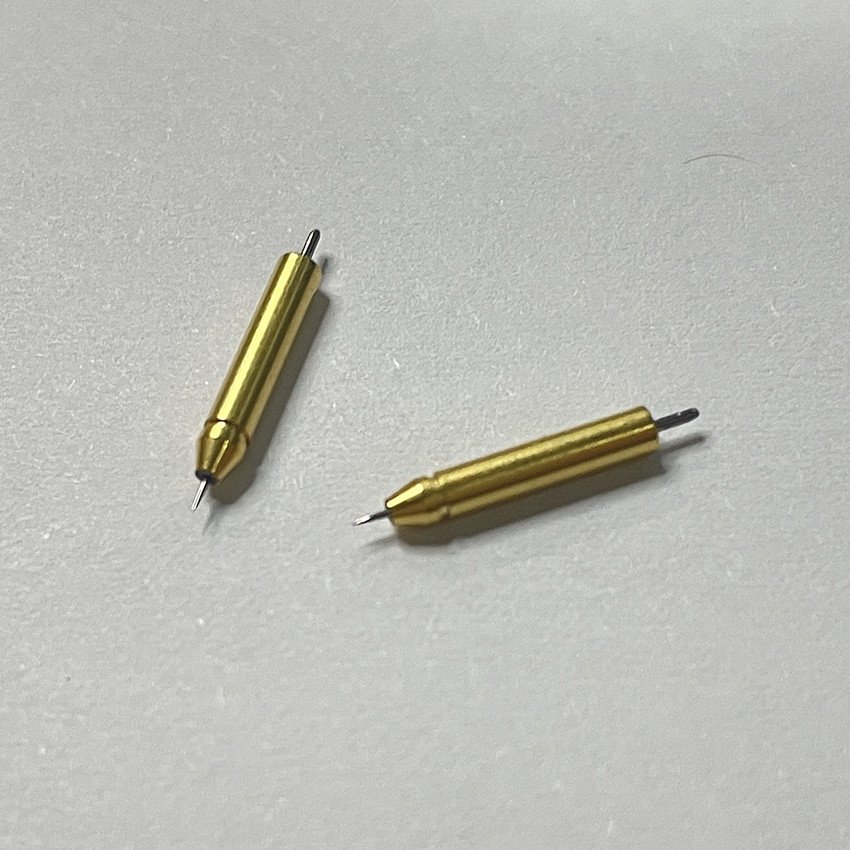


ATG 3A101804 Flying Probe
$30.00
ATG 3A101804 Flying Probe is a precision probe needle for ATG flying probe testers to accurately contact PCB test points during automated electrical testing
Model: ATG 3A101804
Needle diameter: 0.1-0.3mm
Packing:6pcs/box
1.ATG 3A101804 Flying Probe Overview
ATG 3A101804 is a high-precision test probe designed for ATG flying probe tester, which is the core component of the flying probe test system. The flying probe tester collects electrical signals (such as resistance, voltage, current, etc.) by moving the probe at high speed and contacting the component pins or solder joints on the PCB board, and combines algorithm analysis to determine the connection status between components (such as leaking solder, cold solder, open circuit, short circuit, etc.), thereby verifying the electrical reliability of the PCB.
2.ATG probe Features
Needle diameter: 0.1-0.3mm (suitable for high-density PCB, such as mobile phone motherboards, smart wearable devices).
Stroke: 1-5mm (adjustable to ensure that the probe stably contacts the component pins to avoid crushing the solder joints).
Repeat positioning accuracy: ±0.005mm (to ensure that the probe contact position is consistent during multiple tests).
3.High-speed dynamic performance
Contact resistance: ≤0.1Ω (low impedance design to reduce test signal attenuation).
4.Durability and lifespan

FAQ
Q1.What’s the function of hardtouch needle Probe?
A: It’s a spare parts for ATG flying probe testing machine.
2. How do I choose the correct ATG replacement probe?
Match the original part number, tester model, test-head configuration, and probe dimensions. Also confirm the tip geometry and contact requirements. Appearance alone is not enough to establish compatibility.
3. Are ATG test probes compatible with every ATG flying-probe tester?
Do not assume universal compatibility. Different machines and test heads may require different needles, holders, or probe assemblies. Provide the machine serial number and existing probe part number when ordering replacements.
4. What is the difference between hard-touch and soft-touch probes?
The distinction concerns the probing arrangement and contact behavior, not simply the hardness of the needle material. Soft-touch configurations are intended for gentler contact on sensitive test points. Confirm the approved probe type and force settings for your machine rather than treating the two types as interchangeable.
5. Can ATG probes test fine-pitch pads and small test points?
Suitability depends on tip geometry, positioning accuracy, pad spacing, and board stability. A smaller tip alone does not guarantee reliable access. Supply the minimum pad dimensions and spacing so the complete probing setup can be evaluated.


 English
 German
 French
 Spanish
 Vietnamese
 Russian