
1. Overview: The Science of Contact Cleaning
In PCB manufacturing, a sticky roller (also called a tacky roller) is a specialized contamination control tool used to remove microscopic particles such as dust, lint, glass fibers, and metal shavings from the surface of printed circuit boards.
In an industrial setting, the process usually involves a dual-component system:
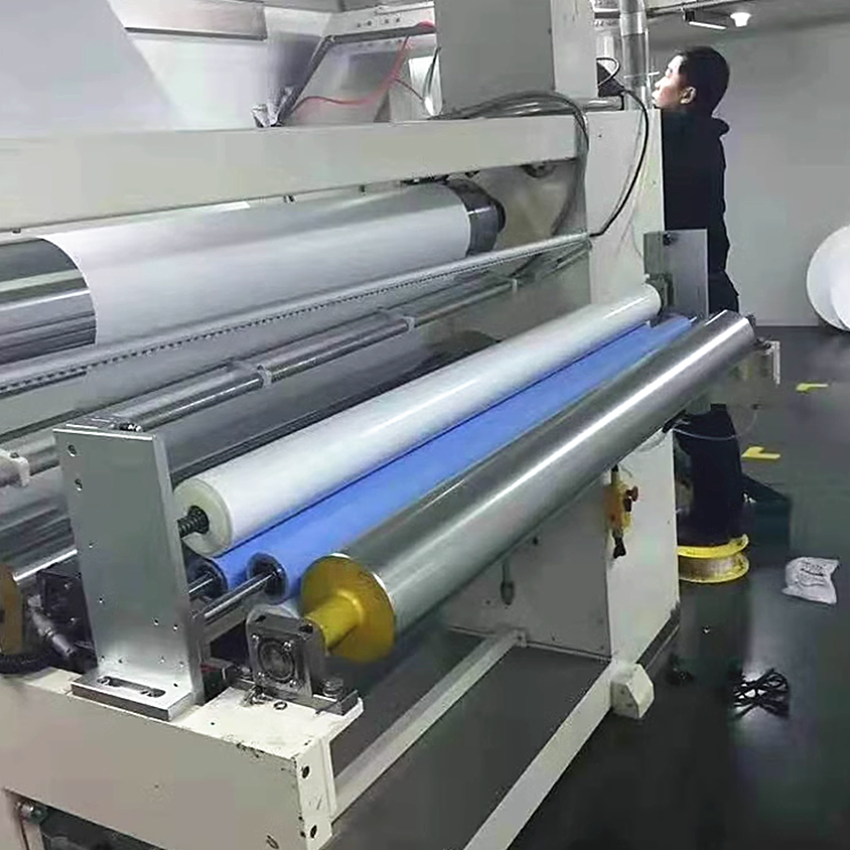
- The Silicone Rubber Roller: A soft, elastomer-based roller that makes contact with the PCB.
- The Adhesive Paper Roll: A high-tack consumable that “cleans” the silicone roller by stripping away the captured dust.
2. Key Types of Sticky Rollers in Manufacturing
Not all sticky rolls are created equal. Here is the professional classification of Sticky Rollers (Contact Cleaning Systems) used in the PCB industry, presented in a technical English table format.
Major Types of Sticky Rollers in PCB Manufacturing
| Type | Professional Name | Primary Component | Key Role / Application |
| Automated System | DCR (Dust Removal Roller) | Silicone Roller + Adhesive Paper Roll | Integrated into VCM (Vertical Cleaning Machines) for high-speed, in-line production. |
| Manual Tool | Handheld Sticky Roller | Handle + Disposable Adhesive Roll | Used in cleanrooms or rework stations for manual board cleaning before inspection. |
| Interface Roller | Silicone Rubber Roller | Special Synthetic Elastomer | The roller that directly touches the PCB; uses surface tension to “lift” particles. |
| Consumable | Adhesive Paper Roll | High-Tack Adhesive Film / Vinyl | Acts as the “waste collector” by stripping dust off the silicone roller. |
| Specialized | ESD Sticky Roller | Static Dissipative Material | ESD-Safe Silicone Roller Used for IC Substrates or sensitive components to prevent electrostatic discharge. |
3. Major Functions and Roles: Why DCR is Mandatory
1. Active Particle Entrapment
The Sticky Rubber Roller uses surface tension to “lift” microscopic debris—such as copper shavings, fiberglass dust, and skin cells—that air knives or vacuums cannot move. It physically breaks the air boundary layer on the PCB surface to grab particles smaller than 50 microns.
2. Contaminant Transfer & Isolation
In an automated DCR system, the roller performs a continuous transfer:
- Lifting: The silicone roller picks up dust from the PCB.
- Stripping: An Adhesive Paper Roll (the collector) instantly strips the dust off the silicone. This ensures the contact surface is always refreshed, preventing cross-contamination between boards.
3. ESD (Electrostatic Discharge) Control
High-end Tacky Rollers are engineered with anti-static properties. Their role is to neutralize the surface charge of the PCB during the cleaning process, preventing the board from acting as a “dust magnet” immediately after it leaves the machine.
4. Process Gatekeeping (Yield Protection)
Sticky rollers are strategically placed to prevent specific defects:
- Pre-Lamination: Prevents “Pits” or voids under the dry film.
- Pre-Exposure: Ensures no dust blocks the light path, preventing “Open Circuits.”
- Pre-Solder Mask: Ensures perfect ink adhesion to the copper traces.
5. Residue-Free Surface Prep
A professional Adhesive Roller must be “non-migratory.” Its role is to clean the board while ensuring zero chemical “ghosting” or glue transfer. This is vital for the success of subsequent chemical processes like OSP or ENIG.
Summary Table: Function vs. Benefit
| Key Function | Strategic Role | Business Benefit |
| Mechanical Lifting | Break the boundary layer | Removes sub-50 micron particles |
| Particle Transfer | Refresh the contact surface | Zero cross-contamination |
| ESD Dissipation | Neutralize surface charge | Prevents secondary dust attraction |
| Residue-Free Grip | Protect surface chemistry | Ensures perfect chemical bonding |
4. 2026 Technical Considerations
As we navigate 2026, the technology behind the sticki roll and vinyl adhesive roll has evolved to meet the demands of “Industry 4.0.”
I. Automated Tackiness Monitoring
Modern DCR systems now include sensors that measure the “Tackiness” of the Silicone Rubber Roller. When the roller becomes too dirty to clean effectively, the system automatically triggers a sheet-change on the adhesive vinyl rolls, reducing human error.
II. Zero-Silicone Migration
There is a growing trend toward “Silicone-Free” sticky rolls. While silicone is an excellent gripper, some high-end aerospace PCBs are sensitive to silicone migration. Manufacturers are now developing vinyl adhesive roll materials and synthetic elastomers that offer the same grip without the silicone chemistry.
III. Extreme Thinness Handling
With the rise of 5G and 6G components, boards are becoming as thin as paper. A traditional sticki rolls might “wrap” a thin board around itself, causing a jam. 2026-era Contact Cleaning Rollers use ultra-low-tack formulas and vacuum-backed stages to ensure the board stays flat while the Particle Removal Roller does its job.
IV. Geo-Specific Sustainability Standards
In regions like the EU and North America, the waste generated by adhesive paper rolls is under scrutiny. 2026 has seen the rise of biodegradable adhesive roll backings and recyclable adhesive vinyl rolls, allowing factories to maintain “Green Factory” certifications while keeping their lines clean.
5. Choosing the Right Adhesive Solution
Selecting the right roll sticky is a balance of chemistry, physics, and economics. A factory in 2026 must consider:
- The Substrate: Is it Rigid, Flex, or Rigid-Flex?
- The Environment: Is it a Class 100 or Class 1000 cleanroom?
- The Target: Are you removing copper dust, human hair, or microscopic skin cells?
| Term | Role | Best For |
| DCR | Automated Dust Collection | High-speed production lines |
| Silicone Rubber Roller | The Interface | Direct board contact |
| Adhesive Vinyl Rolls | The Collector | Removing debris from the silicone |
| Sticky Lint Roller | Manual Rework | Laboratory and prototype use |
Welleltron in Industrial sticky roller
As Welleltron continues to support the PCB industry, we recognize that the humble sticky roll is the silent guardian of the electronic age. By choosing the right Particle Removal Roller and maintaining a strict DCR protocol, manufacturers can confidently push the boundaries of what is possible in 2026 and beyond.
 Russian
  English
  German
  French
  Spanish
  Vietnamese