
1. Safety First: Preparing for the Change
Before you learn how to remove a circular saw blade, you must prioritize safety. A power tool is only safe when it has no access to power.
- Disconnect Power: If you have a corded tool, unplug it. If you use a cordless model, remove the battery. Never attempt to change circular saw blade components while the tool is “live.”
- Engage the Spindle Lock: Most modern saws have a button that locks the blade on circular saw in place, preventing the motor from turning while you loosen the bolt.
- Clear the Area: Ensure your workbench is clean and you have your tool saw accessories, such as the arbor wrench, ready.
2. Step-by-Step: How to Replace a Circular Saw Blade
If you’ve wondered how do you change a circular saw blade, the process is relatively universal across brands, whether you are using a standard DIY model or an industrial circular saw.
Step 1: Retract the Guard and Loosen the Bolt
Locate the arbor nut in the center of the blade circular. Press the spindle lock button and use your wrench to turn the nut.
Step 2: How to Remove a Circular Saw Blade
Once the arbor nut and the outer flange are removed, carefully lift the saw blade out of the housing. This is a great time to inspect the interior for sawdust buildup.
Step 3: Selecting the New Blade
Choosing the right blade for circular saw work depends on your material.
- For clean cuts in trim, choose a circular saw finishing blade or circular saw blades for fine cut.
- For rough framing, a standard carbide saw blade with fewer teeth is ideal.
- For specialized tasks, you might need a diamond blade for circular saw (for masonry) or a metal cutting blade for circular saw.
Step 4: Installation and Blade Direction
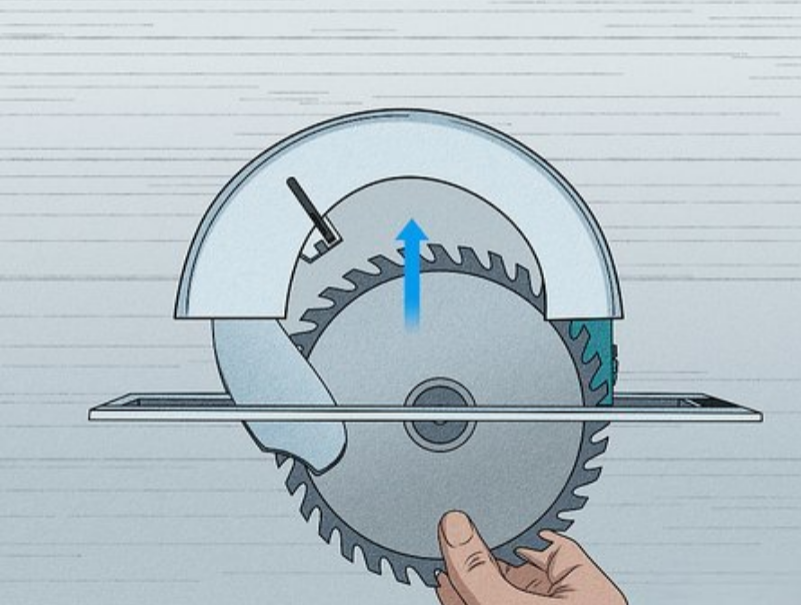
When installing the new saw blade, pay close attention to the circular saw blade direction. Most blades have an arrow printed on them. This arrow must match the rotation arrow on the saw’s guard. If you install it backward, the saw will not cut; it will simply create friction and smoke.
Step 5: Reassemble and Tighten
Place the outer flange back on the arbor and hand-thread the nut. Engage the spindle lock and snug the nut with the wrench. How do you change the blade on a circular saw without over-tightening? Firm pressure is enough; the rotation of the saw naturally keeps the nut secure.
3. Understanding Saw Blade Sizes
Different saws require different saw blade sizes. Using the wrong size can be extremely dangerous. Common sizes include:
- Small Cordless Saws: Often use saw blade 6 inch or 6 1 2 saw blade sizes.
- Standard DIY Saws: The 7 1 4 saw blade (or 7 1/4 saw blade) is the industry standard for general construction.
- Compact/Detail Saws: May require 76mm saw blades or 6 1 4 saw blade variants.
- Table Saws: Frequently utilize a 10 inch saw blade.
- Large Industrial Saws: May go as high as a 16 saw blade or even a 19 saw blade for timber framing.
Check your tool’s manual or a saw blade size chart to verify compatibility before purchasing new saw blades circular.
4. Choosing the Right Blade for the Job
Not all saw blades are created equal. The “tooth count” and “material” determine the application.
- Woodworking: Use saw blades wood or hardwood circular saw blades. For ripping along the grain, a circular saw rip blade is best. For cutting across the grain, use a crosscut circular saw blade.
- Metalwork: A metal saw blade or metal cutting circular saw blades are designed with specific tooth geometry to handle steel or aluminum. For specialized metal tasks, look for a circular saw aluminium blade.
- Fine Finishes: For cabinetry, a saw blade fine (high tooth count) is necessary to prevent tear-out. For thin sheets, use a circular saw blade for plywood.
- Masonry: A circular saw diamond blade or circular saw diamond blade is required for stone, tile, or concrete.
5. Maintenance: Sharpening vs. Replacing
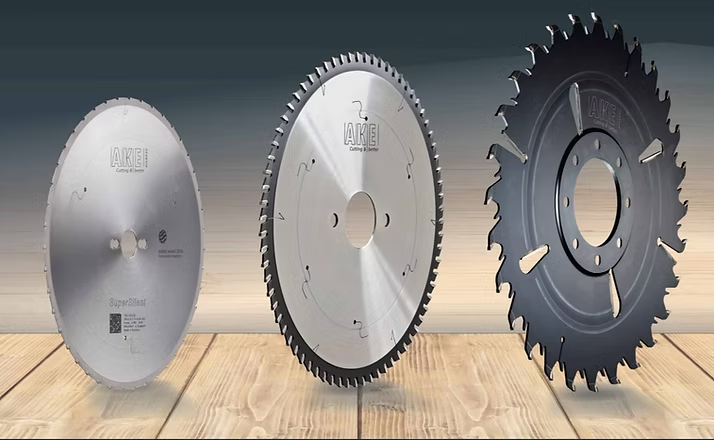
If your blade circular saw is dull but not missing teeth, you might consider maintenance instead of replacement.
- Sharpening: You can learn how to sharpen a circular saw blade using circular saw blade sharpening tools. While professional saw blade sharpening is usually better, a handheld saw blade sharpener can work for DIYers.
- Cleaning: Sometimes a blade isn’t dull; it’s just covered in pitch. Clean your carbide circular saw blade with a specialized solvent to restore performance.
Summary of Circular Saw Blade Specs
| Feature | Specification / Type | Best Use Case |
| Standard Size | 7 1/4 circular saw blade | General Construction |
| High Finish | Fine blade circular saw | Cabinetry & Plywood |
| Hard Material | Diamond circular saw blade | Concrete & Tile |
| Metal | Metal cutting circular saw blade | Steel & Aluminum |
| Safety Check | Circular saw blade direction | Every installation |
Conclusion
Knowing how to replace a blade on a circular saw is more than just a maintenance task—it is the key to achieving professional results. By matching the right circular saw blade to your specific material—be it wood circular saw blades or a cutting disc for circular saw—you ensure cleaner cuts and a longer lifespan for your industrial circular saw.
Always remember: if you feel resistance or see smoke, stop and check your blade direction circular saw. A sharp, correctly installed carbide circular saw blade makes woodworking a joy rather than a struggle.
 Russian
  English
  German
  French
  Spanish
  Vietnamese