
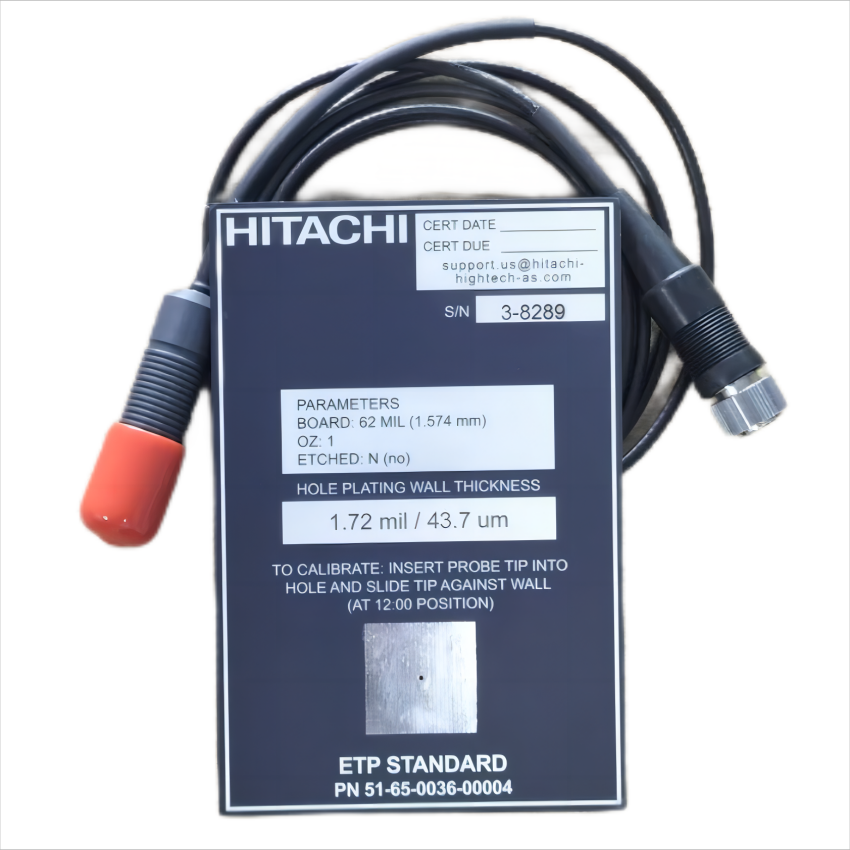
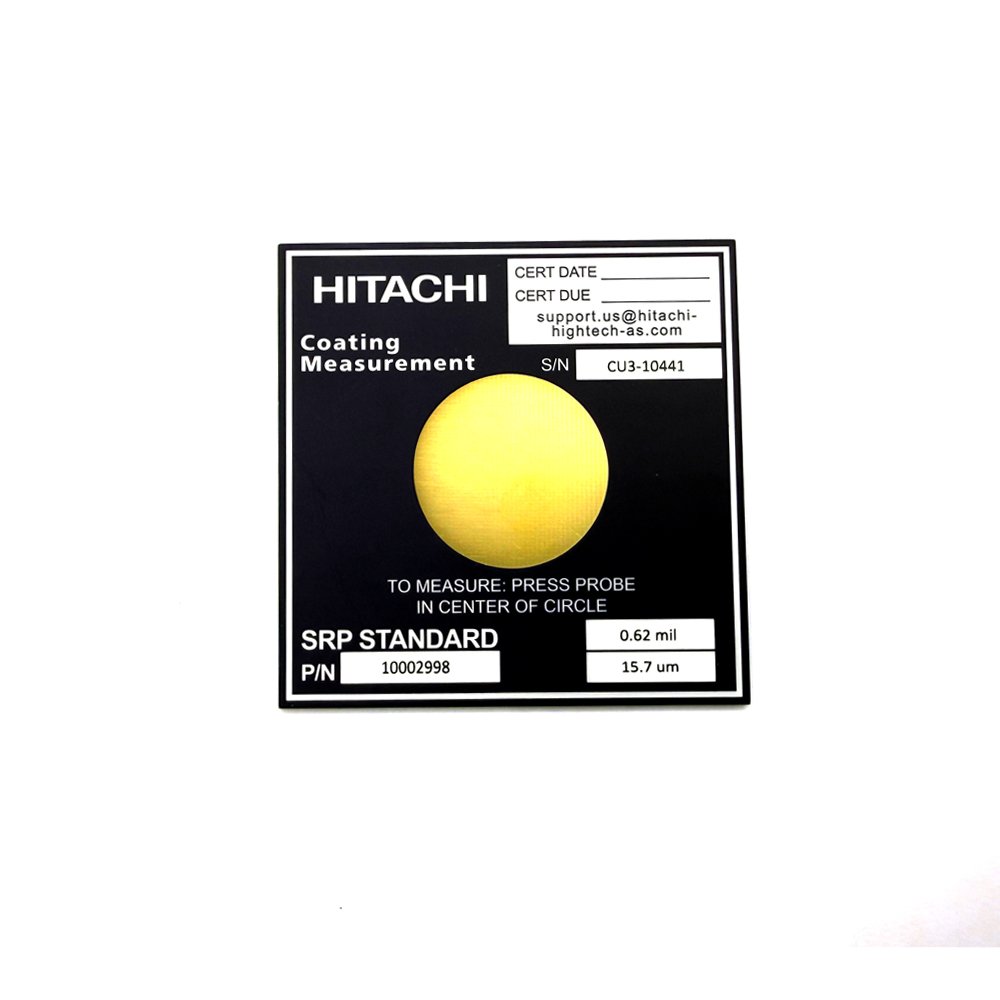
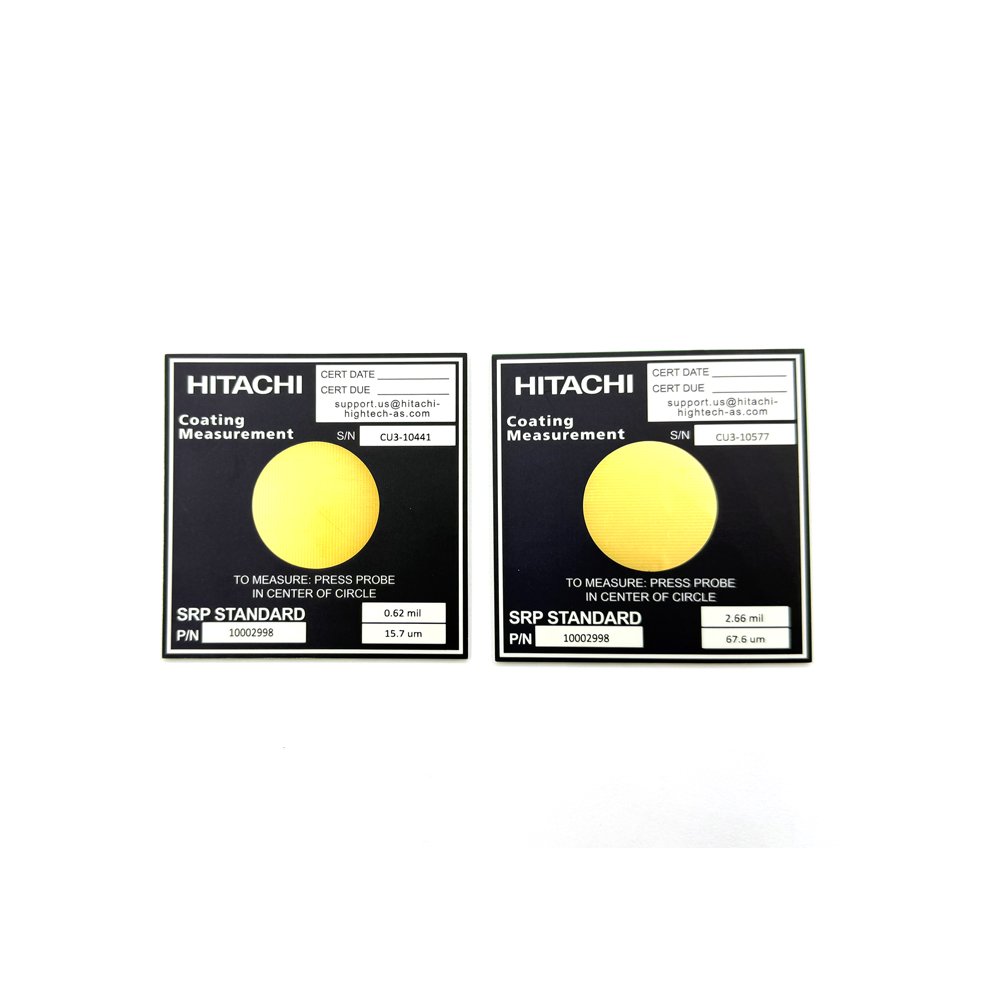
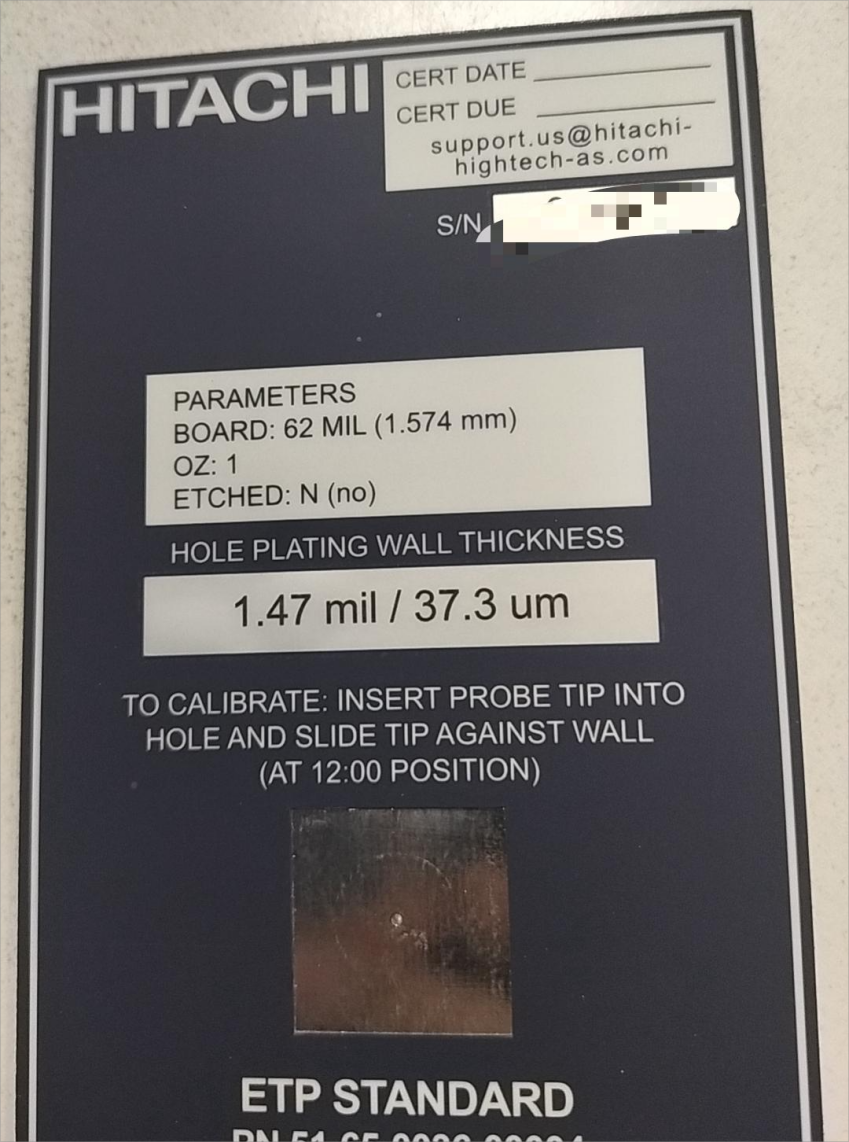
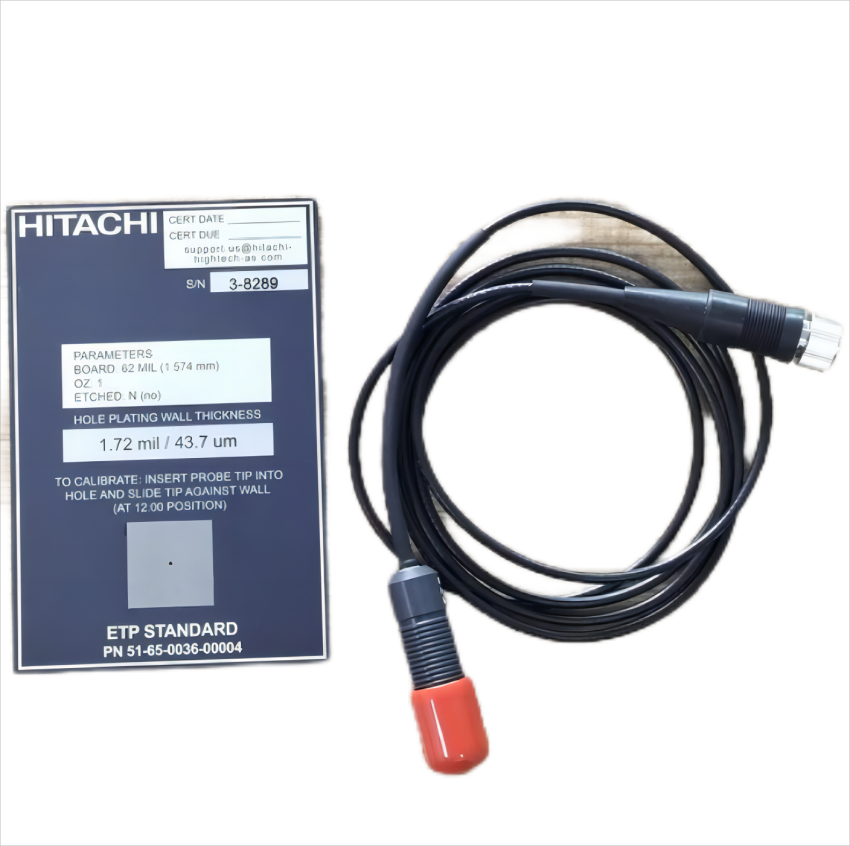
Original Hitachi SRP-4 Calibration Standard ETP Standard
$400.00
Hitachi SRP-4 Calibration Standard is used to accurately calibrate SRP-4 micro-resistance probes, ensuring precise and repeatable copper thickness measurements on printed circuit boards
Material: High-purity electrolytic copper
Dimensions:3″×3″
Hitachi calibrate stand Overview
Hitachi SRP-4 Calibration Standard (also called Cmi500 Calibration Standard and Cmi700 Calibration Standard and PTH Hole calibration standard plate) is a core precision tool for PCB thru-hole copper thickness testing. Specifically designed for Hitachi CMI500 Hole Cu Thickness Tester (specialized in hole copper detection) and CMI700 Cu Thickness Tester (dual-purpose for surface and hole copper), it serves as a “reference benchmark” to correct gauge drift over time—critical for reliable data in PCB electroplating and quality control. Made of high-purity copper with precision-drilled thru-holes (matching PCB PTH hole specifications), this Calibration Standard Plate eliminates measurement deviations caused by uncalibrated equipment. As part of our one-stop PCB testing solutions, it works seamlessly with PTH Hole ETP Probe (for hole copper testing), providing comprehensive support for PCB factories and testing labs.
Material Technology and Certified Values
The integrity of the Calibration Standard Plate is defined by its material construction and the rigor of its certification.
1. Material Construction
The plate replicates the geometry and material composition of a real PCB being measured:
Substrate: Typically a non-conductive, high-grade laminate material (similar to FR4) to simulate the actual product environment.
Coating: Features highly uniform Certified Thickness layers of pure copper. These copper layers are deposited under strict quality control to ensure minimal variation across the standard’s surface.
2. Certified Thicknesses
The set usually comprises multiple plates, each representing a distinct, critical thickness point across the SRP-4’s operating range (e.g., 5μm, 18μm, 35μm, 70μm). These values are verified by independent, high-accuracy methods.
Key Features and Essential Role
The Hitachi SRP-4 Calibration Standard plays a non-negotiable role in PCB Quality Control (QC).
Establishing Zero and Span: The standard set is used to define both the zero point (unplated substrate) and the span (the maximum thickness) of the gauge, ensuring the entire measurement curve is accurate.
Eliminating Drift: Regular use of the standard plate compensates for environmental factors (temperature, humidity) and electronic drift within the CMI instrument, ensuring long-term measurement consistency.
Post-Maintenance Verification: After any significant event, such as SRP-4 Probe replacement or instrument servicing, the Standard Plate is the first item measured to confirm operational accuracy before production testing resumes.
Application
The primary usage is confined to the Surface Finishing Industry and Electronics Manufacturing.
| Application Scenario | Search terms | Value Delivered |
| Routine QC Checks | Calibration Standard Plate / Standard Calibration Plate | Ensures that every measurement taken during a production run is accurate and verifiable, reducing scrap rates. |
| New Probe Installation | CMI700 Calibration Standard / SRP-4 Calibration Kit | Essential for setting the gain and offset of the new probe, guaranteeing its initial 1% accuracy. |
| Compliance & Audits | NIST Traceable Copper Thickness Standard | Provides the necessary documentation and traceability required for ISO 9001 and high-reliability industry audits (e.g., automotive). |
| Technical Research | Calibration Plate Meaning / Calibration Standard Definition | Used to define and validate the accuracy limits of new PCB materials or plating processes. |


 French
  English
  German
  Spanish
  Vietnamese
  Russian