
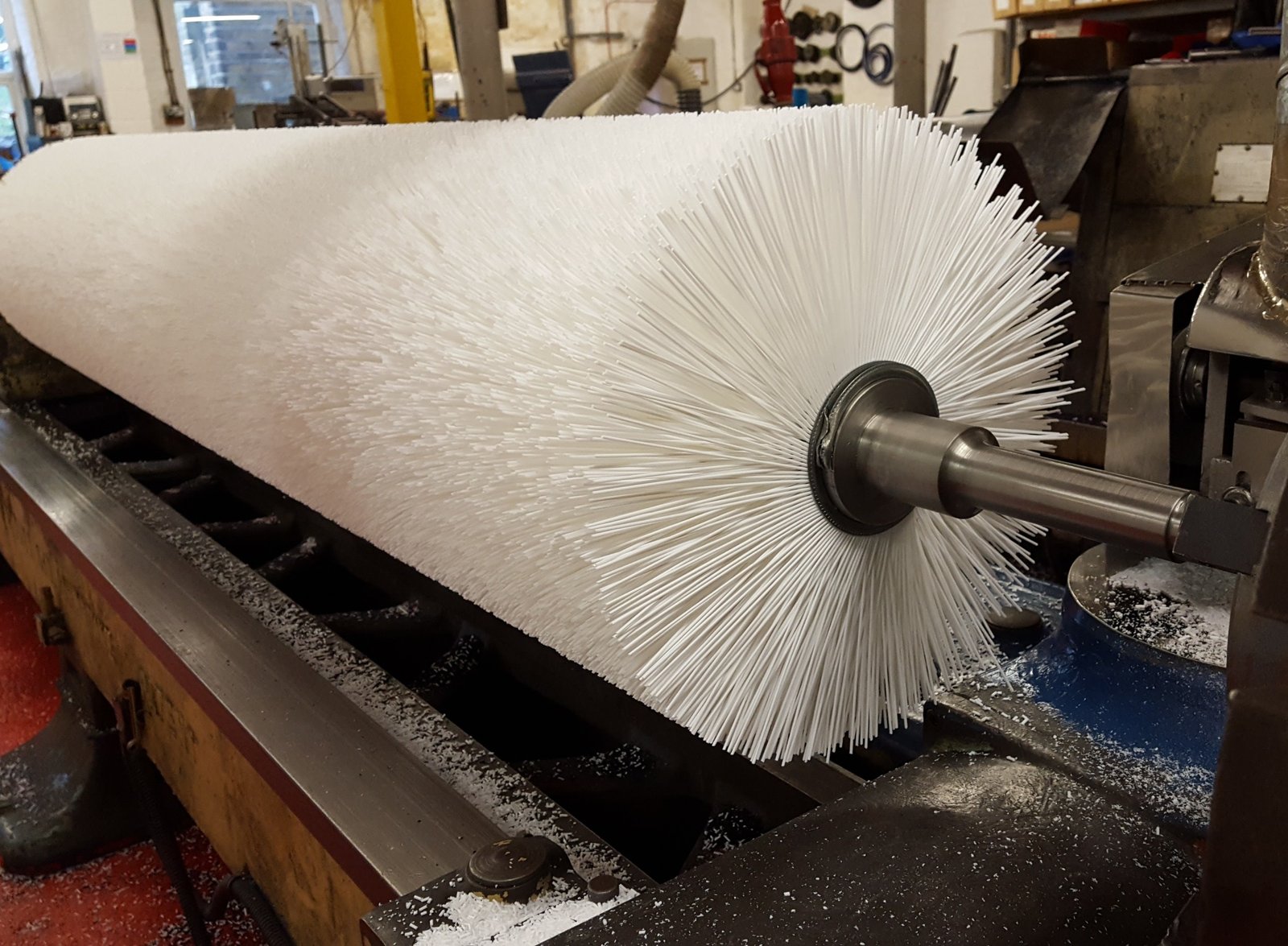
Industrial brush rollers, also known as a cylindrical or rotary brush, is a rotating tool designed to interact with a substrate’s surface for cleaning, deburring, or polishing. In 2026, the rise of “Smart Manufacturing” has seen the integration of sensors into industrial brush rollers, allowing facilities to monitor bristle wear and temperature in real-time.
Types of industrial brush rollers
The diversity in industrial roller brushes stems from their construction and filament choice. Selecting the right type is a critical decision for any brush manufacturer.
1. Spiral Industrial Brushes (Spiral Wound)
Spiral industrial rollers are created by winding a continuous brush strip around a metal shaft.
- Key Advantage: They offer a high-density brushing face that can be easily replaced. Instead of replacing the entire core, an industrial brush corporation can often just replace the spiral wrap, making it a cost-effective industrial brush solution.
- Application: Ideal for wide-surface cleaning and high-speed conveyor lines.
2. Staple-Set Roller Brushes
In staple-set construction, tufts of bristles are secured into pre-drilled holes in a plastic or metal core using a metal staple.
- Key Advantage: Allows for precise patterns (like V-shapes or chevrons) to move debris toward a specific direction.
- Application: Common in the food industry and for brushes industrial cleaning of delicate glass.
3. Abrasive Nylon Brushes
These are a specialty of industrial nylon brush production. The nylon filaments are impregnated with abrasive grits like Silicon Carbide (SiC) or Aluminum Oxide.
- Key Advantage: Provides aggressive cutting power while maintaining the flexibility of nylon.
- Application: Used extensively for industrial brush applications in metal finishing and PCB deburring.
Industrial Brush Applications
The versatility of industrial roller brushes allows them to span across every major sector of the global economy.
Electronics & PCB Scrubbing
industrial brush roller is vital for surface roughening before lamination. Using 320# to 600# abrasive nylon, these brushes create a microscopic “tooth” on the copper, ensuring perfect adhesion for high-speed AI servers and 6G components.
Automotive & Aerospace Finishing
In these sectors, industrial brush corp specialists provide rollers for “deglazing” engine cylinders or deburring complex turbine blades. The focus here is on industrial cleaning brushes that remove razor-sharp burrs without altering the part’s critical dimensions.
Solar & Renewable Energy
As global solar capacity hits record highs in 2026, specialized industrial cleaning brushes are used to maintain photovoltaic efficiency. Large-scale industrial brush rollers made with soft, anti-static nylon prevent micro-scratches while removing desert dust and debris.
| Industry | Primary Brush Type | Core Function |
| PCB/Electronics | Abrasive industrial nylon brush | Micro-roughening & Oxide removal |
| Steel/Metal | Spiral industrial wire brush | Heavy descaling & Rust removal |
| Food/Pharma | FDA-Grade industrial brush rollers | Belt cleaning & Product sorting |
| Automotive | Ceramic fiber industrial roller brushes | High-precision deburring |
Choosing the Right Industrial Brush Solution
When selecting a partner among industrial brush manufacturers, consider these three factors to ensure you receive a high-performance industrial brush:
- Filament Chemistry: Does the application require heat resistance or chemical inertness (e.g., against etching acids)?
- Dynamic Balancing: High-speed rollers must be perfectly balanced to prevent “vibration marks” on delicate surfaces.
- Sustainability: In 2026, many industrial brush corp entities are moving toward bio-based nylon and recyclable cores to meet ESG goals.
Maintenance: Extending the Life of Industrial Brush Rollers
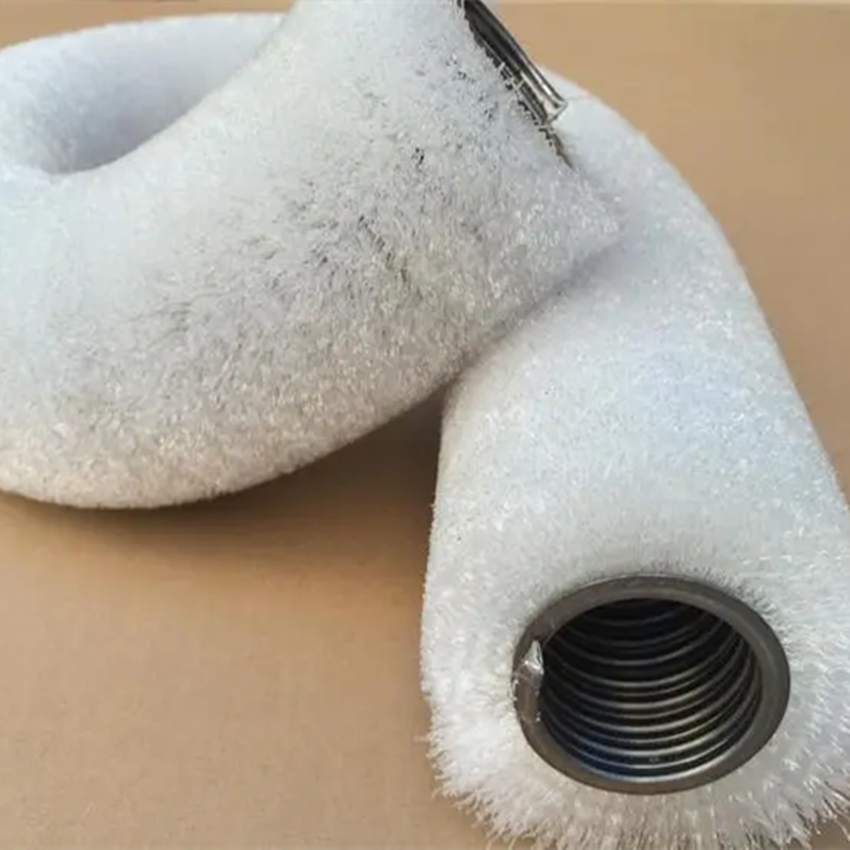
An industrial brush roller is an investment. To ensure your industrial brush solutions remain effective, follow these 2026 industry benchmarks:
- Pressure Monitoring: Excessive pressure is the #1 cause of brush failure. The tips of the bristles should do the work, not the sides.
- Rotation Reversal: Periodically reversing the direction of the industrial brush roller prevents the bristles from “taking a set” or leaning in one direction, effectively self-sharpening the tips.
- Dynamic Balancing: Always ensure your industrial brush corp provides balanced rollers. An unbalanced roller causes vibration, which destroys bearings and leaves uneven patterns on the product.
Case Study: Solving Delamination in 5G Substrates
The Challenge: A leading industrial brush corporation was approached by a PCB facility experiencing high failure rates in their 5G antenna boards. The issue was “Micro-Voiding” caused by inconsistent copper surface preparation.
The Solution: The team at the industrial brush corp developed a custom brush manufacturer solution: a hybrid spiral industrial roller. It combined ultrafine 1000-grit abrasive filaments with a “variable density” pattern.
The Result: By switching to this specific industrial brush roller, the facility increased its lamination yield by 14% and extended the brush life cycle by 30%, saving thousands in annual maintenance.
Conclusion
The evolution of industrial brushes reflects the broader shift toward precision and intelligence in global manufacturing. From the rugged spiral industrial wire brushes of heavy industry to the microscopic precision of the industrial nylon brush, these tools are the foundation of surface quality.
 French
  English
  German
  Spanish
  Vietnamese
  Russian