1. Classification by Physical Form
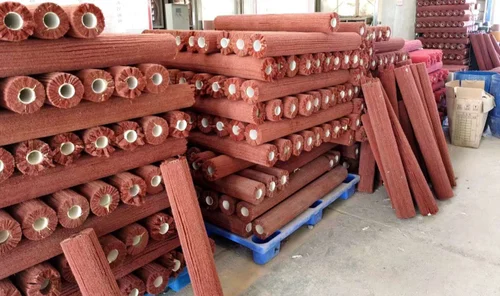
The physical architecture of a nylon bristle brush determines its integration into surface finishing equipment. Industrial users typically categorize these tools into three primary formats:
Industrial Brush Rollers (Cylindrical Brushes)
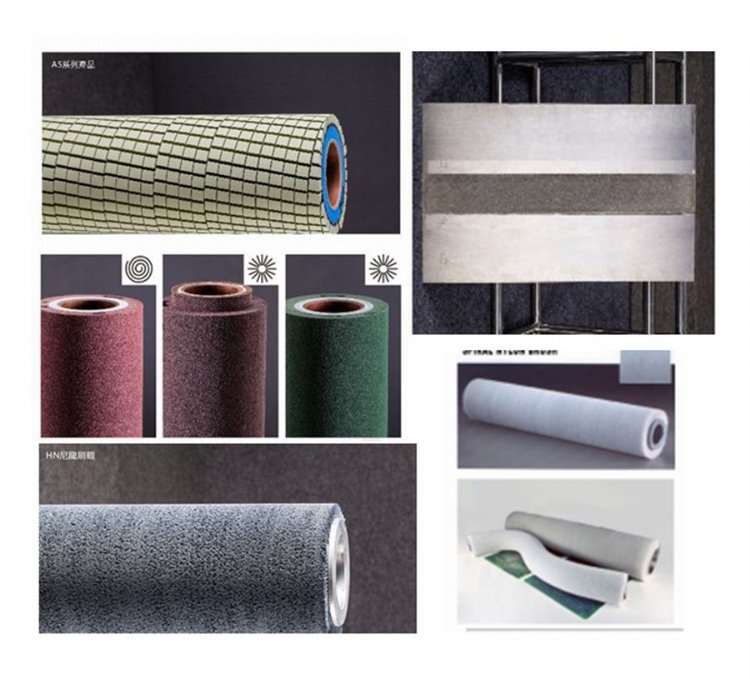
The brush roller is the backbone of automated wet process lines. These are long, cylindrical cores populated with high-density nylon brushes for cleaning. In the PCB industry, industrial brush rollers are synchronized with conveyor speeds to provide continuous, uniform scrubbing across the substrate.
Disc and Cup Brushes
A nylon abrasive brush in disc form is used for vertical or rotary cleaning actions. These are common in CNC machining centers where a nylon deburring brush is required to follow complex paths to smooth out sharp edges.
Handheld and ESD-Safe Brushes
For manual rework or sensitive component cleaning, a nylon cleaning brush with a specialized handle is used. This category often includes the boar and nylon bristle brush. By blending natural fibers with synthetic ones, manufacturers create a nylon boar bristle brush that is naturally anti-static, making it the perfect cleaning brush for pcb board rework.
2. Classification by Process Function
Not all nylon brushes serve the same purpose. Their function is dictated by the additives within the filament and the stiffness of the Nylon Brush bristles.
Mechanical Scrubbing and Cleaning
A standard nylon scrub brush is used for the removal of surface contaminants like oils, fingerprints, and dust. In surface finishing equipment, these are often called “Pre-treatment Brushes.” They provide a clean slate for subsequent chemical processes like ENIG or OSP.
Deburring and Edge Radiusing
The nylon deburring brush is engineered for material removal. By using a nylon abrasive brush, manufacturers can remove “burrs” (excess metal or copper) left behind by drilling or shearing. This ensures that the final product is safe to handle and meets dimensional tolerances.
Surface Roughening (Pumice Scrubbing)
A pumice stone brush (or pumice brush) is a specialized subset. It is used in conjunction with a pumice slurry to create a microscopic “tooth” on copper surfaces. This “micro-roughness” is essential for the adhesion of dry film or solder mask.
3. Technical Specifications and Professional Standards
When sourcing from nylon brush manufacturers, engineers must look beyond the generic term “brush.” Professional-grade industrial Nylon Brush selection is based on three critical technical pillars:
Grit Size and Impregnation
Unlike a standard nylon cleaning brush, an abrasive nylon wheel brush has abrasive particles (Silicon Carbide or Aluminum Oxide) embedded directly into the Nylon Brush bristles.
- #320 – #600 Grit: For heavy deburring.
- #800 – #1200 Grit: For fine polishing and surface preparation.
Filament Diameter and Flex Recovery
The diameter of the filament (e.g., 0.1mm to 0.5mm) defines the stiffness. A high-quality nylon bristle brush must have excellent “flex recovery,” meaning the bristles return to their original position after being compressed by the brush roller mechanism.
ESD Safety: The Hybrid Advantage
In electronics, the nylon vs boar bristle brush debate is solved by hybridity. A boar bristle brush nylon blend uses the natural conductivity of animal hair to dissipate static, while the nylon provides the mechanical strength. The boar bristle nylon brush is the industry standard for cleaning static-sensitive CMOS or BGA components.
4. Core Industrial Application Scenarios
The PCB Fabrication Line
The PCB brush is a multi-stage tool.
- Post-Drill: A nylon deburring brush removes copper burrs from hole entries.
- Pre-Dry Film: A pumice stone brush prepares the surface for lamination.
- Post-Etch: A nylon scrub brush removes residual etching chemicals.
Metal Finishing and Machining
In the automotive and aerospace sectors, the abrasive nylon wheel brush is used for “edge blending.” This process ensures that high-stress parts don’t have sharp edges where cracks could initiate. Using an industrial nylon brush is safer than wire brushes because nylon filaments do not snap off and create shrapnel.
Professional Cleaning and Maintenance
The ion professional boar & nylon cushion brush technology, while often associated with hair care, has its roots in precision industrial cleaning. The “cushion” effect allows a nylon cleaning brush to conform to irregular surfaces, ensuring that cleaning nylon brush actions reach into crevices without damaging delicate protrusions.
5. Benefits of Choosing Nylon over Metal or Natural Fibers
Why do nylon brush manufacturers continue to dominate the market? The benefits are quantifiable:
- Safety: Unlike steel brushes, nylon brushes do not leave behind “after-rust” particles on stainless steel or aluminum surfaces.
- Longevity: A nylon abrasive brush can last significantly longer than a wire brush because it does not fatigue and break at the base of the filament.
- Consistency: The performance of a nylon brush for cleaning remains consistent throughout its life because the abrasive grit is distributed throughout the entire bristle, not just the tip.
- Non-Destructive: For delicate PCB brush applications, nylon provides a level of Non-abrasive Cleaning that metal cannot match.
6. Maintenance: How to Perform Nylon Brush Cleaning
To maintain the efficiency of your surface finishing equipment, the brushes themselves must be cared for.
- Rinsing: After a shift, nylon brush for cleaning should be rinsed with DI water to prevent chemical salt buildup.
- Dressing: Industrial brush rollers occasionally need “dressing” (running them against an abrasive plate) to expose fresh grit in the nylon abrasive brush filaments.
- Storage: Never store a brush roller resting on its bristles; always hang it by the shaft to prevent “flat spots.”
Welleltron Edge in Industrial Brushing
For Welleltron PCB Consumables Supplier, we understand that a nylon cleaning brush is more than just a tool—it is a critical component of your quality control system. By choosing the correct grit, diameter, and physical form, you ensure that your PCB brush or industrial nylon brush delivers a perfect finish every time.
 Spanish
  English
  German
  French
  Vietnamese
  Russian